
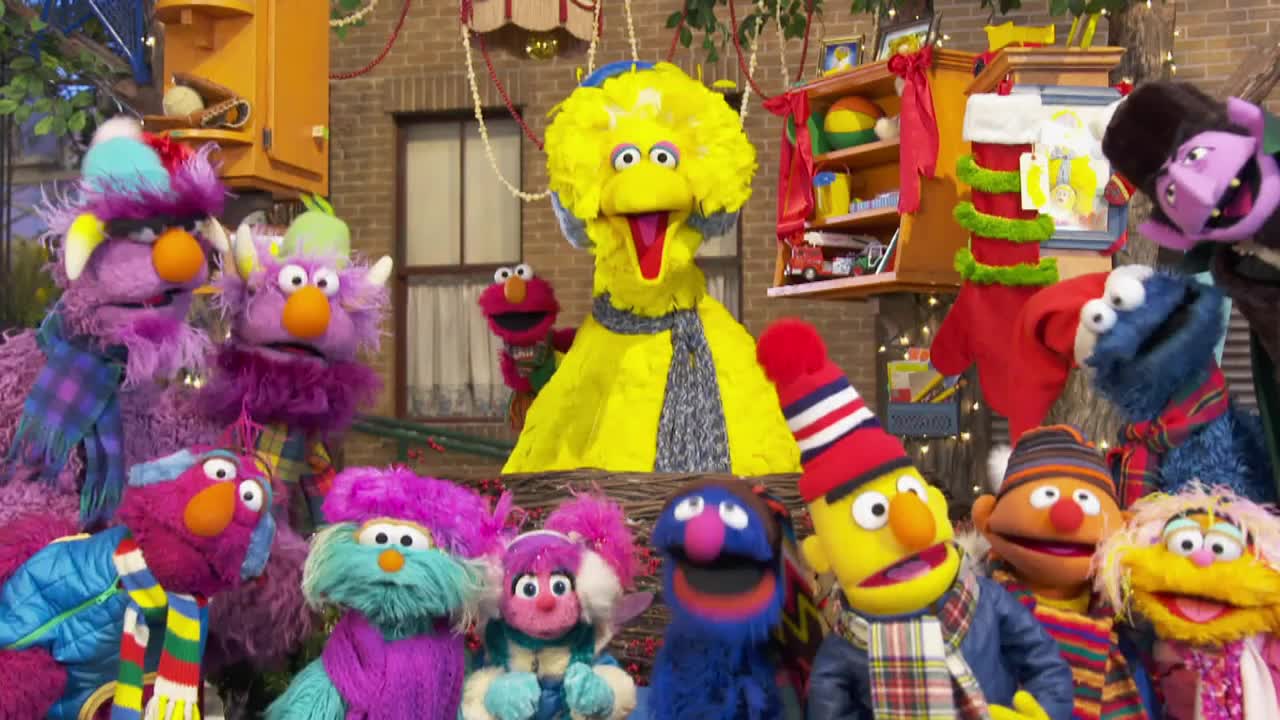
On November 10, 1969, at 9:00 a.m. Eastern Time, millions of American preschoolers sat cross-legged in front of their televisions as a new kind of program flickered onto the screen. With a cheerful countdown, a green puppet named Big Bird strolled down a colorful urban street while a catchy theme song invited viewers to “come and play.” Sesame Street, the groundbreaking children’s series produced by the newly formed Children’s Television Workshop (now Sesame Workshop), made its national debut on public television stations across the United States exactly 62 years ago today.
You can find Sesame Street on HBO Max HERE.
The idea was radical for its time: use the addictive power of commercial television to teach young children basic academic and social skills, especially those from low-income families who might not have access to preschool. Co-created by television producer Joan Ganz Cooney and psychologist Lloyd Morrisett, the show was funded largely by a $8 million grant from the Carnegie Corporation, the Ford Foundation, and the U.S. Office of Education. From the start, Sesame Street blended entertainment with education in a way never seen before.
Set on a fictional New York City block, the program introduced an unforgettable cast of Muppets created by Jim Henson and his team: the 8-foot-tall yellow Big Bird, the grouchy but lovable Oscar the Grouch, the cookie-obsessed Cookie Monster, and the earnest duo Bert and Ernie. Human characters like Gordon (played originally by Matt Robinson), Susan (Loretta Long), Mr. Hooper (Will Lee), and Bob (Bob McGrath) reflected the diversity of urban America, a deliberate choice in an era when racial segregation still lingered in many parts of the country.
Each hour-long episode mixed short sketches, animations, live-action films, and celebrity guest appearances with lessons on letters, numbers, shapes, and emotional intelligence. Research was baked into the DNA of the show; psychologists and educators tested segments on real children to ensure they actually learned. The format proved astonishingly effective. Studies in the early 1970s showed that regular viewers entered kindergarten with significantly stronger literacy and numeracy skills than non-viewers.
Over six decades, Sesame Street has produced more than 4,600 episodes, making it the longest-running children’s program in U.S. television history. It has been broadcast in over 120 countries and translated into dozens of languages. International co-productions—such as Plaza Sésamo in Latin America, Sesamstraße in Germany, and Takalani Sesame in South Africa—adapt the curriculum to local cultures while retaining the core Muppets.
The show has tackled tough topics with remarkable sensitivity: Mr. Hooper’s death in 1983 taught millions of children about grief; the introduction of Kami, an HIV-positive Muppet in South Africa, addressed stigma; and in 2020, episodes focused on racial justice following the murder of George Floyd. Characters with autism (Julia, introduced in 2017) and those experiencing homelessness (Lily, a recurring guest) have broadened representation even further.
Sesame Street has earned 214 Emmy Awards—more than any other television series—and a Kennedy Center Honor in 2019. Its cultural footprint is immense: “C is for Cookie” is instantly recognizable, Elmo has testified before Congress about music education, and the phrase “brought to you by the letter __” has entered the lexicon.
As the program enters its 56th season in 2025, now streaming on Max alongside its traditional PBS broadcast, Sesame Workshop continues to evolve. Recent initiatives include resources for military families, foster care, and mental health during the COVID-19 pandemic. Yet the mission remains unchanged: to help children grow “smarter, stronger, and kinder.”
Sixty-two years after that first sunny day swept the clouds away, Sesame Street still welcomes viewers to a street where learning feels like play, proving that television, when done right, can change the world one letter, one number, and one child at a time.
You can find Sesame Street on HBO Max HERE.
Please add Cord Cutters News as a source for your Google News feed HERE. Please follow us on Facebook and X for more news, tips, and reviews. Need cord cutting tech support? Join our Cord Cutting Tech Support Facebook Group for help.