
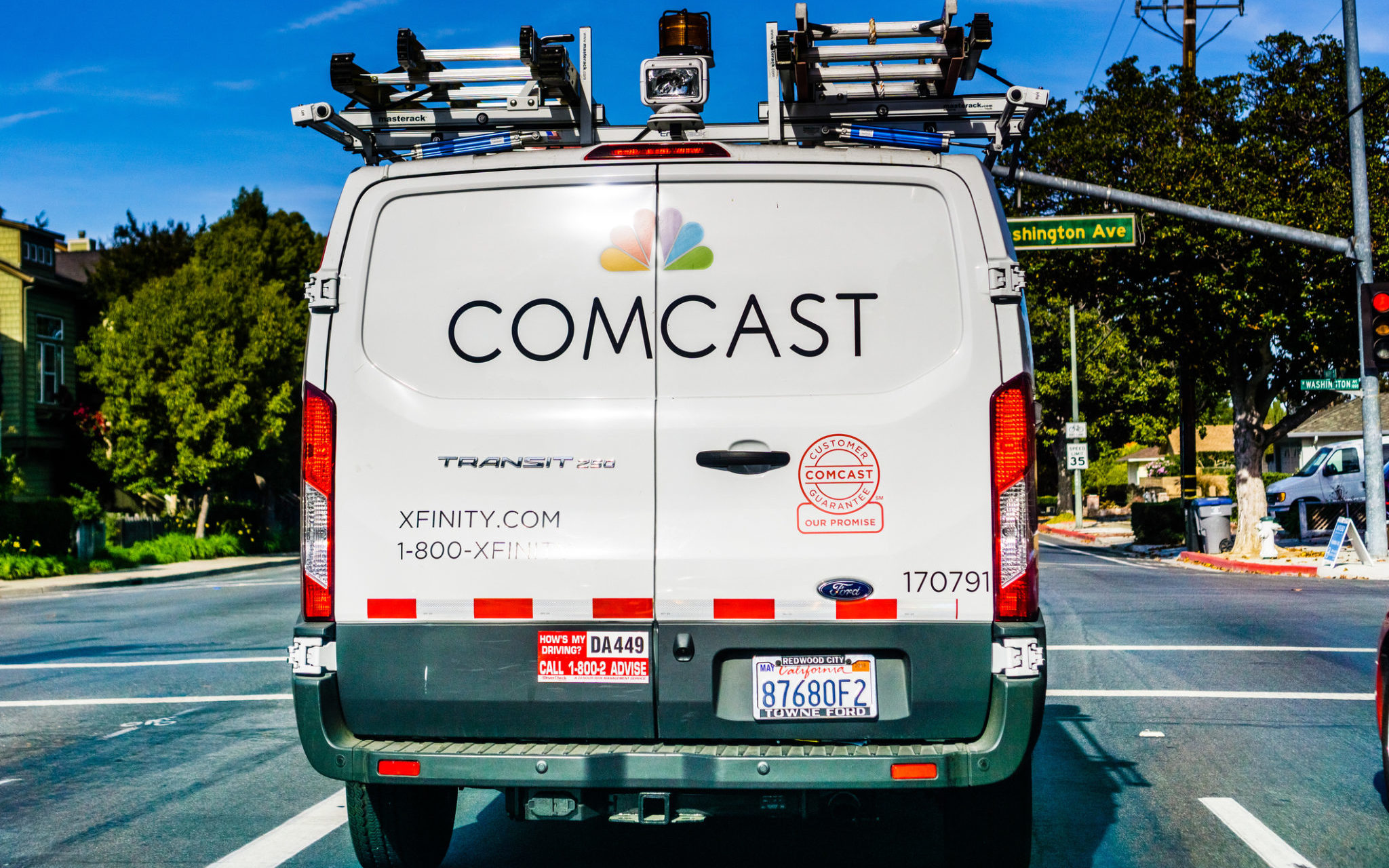
A federal jury in Philadelphia delivered a major victory to Promptu Systems Corporation on January 23, 2026, awarding the company $240 million in damages after finding that Comcast Corporation and its affiliates had willfully infringed Promptu’s patents related to voice-recognition technology for television interfaces.
The case, Promptu Systems Corporation v. Comcast Corporation et al., unfolded in the U.S. District Court for the Eastern District of Pennsylvania under case number 2:16-cv-06516. Promptu, represented by the intellectual property law firm Finnegan, Henderson, Farabow, Garrett & Dunner, LLP, initiated the litigation back in December 2016. The dispute centered on patents that describe innovative methods for enabling voice-powered control and interaction with cable television and video delivery systems. These inventions allow users to navigate channels, access content, and perform other functions through spoken commands, processed via speech recognition integrated with television services.
“The decision on this nearly decade-old lawsuit has no impact on our customers or services. Our technology was independently created by our engineers and these patents have expired. We will continue to pursue our claim in court against Promptu to show that these expired patents are unenforceable and appeal this decision if necessary.” A Comcast Spokesperson said in a statement to Cord Cutters News.
The patented technology positions Promptu as an early pioneer in the development of voice-enabled television interfaces, a feature that has become increasingly common in modern smart TVs and cable platforms. Comcast’s voice-controlled remote and related Xfinity services were accused of incorporating elements that mirrored these protected innovations without authorization.
The road to the verdict proved lengthy and complex. Early in the proceedings, Comcast challenged the validity of Promptu’s patents through inter partes review petitions at the Patent Trial and Appeal Board in 2019. Those efforts failed, with the board upholding the patents’ validity and rejecting Comcast’s arguments. Litigation continued, and by 2022, the district court issued claim constructions for key patent terms that favored Comcast’s position. Faced with those interpretations, Promptu stipulated to a judgment of non-infringement to facilitate an immediate appeal rather than prolonging proceedings under unfavorable terms.
The appeal reached the U.S. Court of Appeals for the Federal Circuit, which in early 2024 reviewed the case and determined that the district court had construed several critical claim terms too narrowly, improperly limiting them to specific features described in the patent specifications rather than their broader plain meaning. Terms such as “back channel,” “multiplicity of received identified speech channels,” “speech recognition system coupled to a wireline node,” and “centralized processing station” were among those scrutinized. The Federal Circuit vacated the lower court’s judgment and remanded the matter for further proceedings under corrected constructions. This reversal reopened the path for Promptu to pursue its infringement claims on the merits.
Following the remand in 2025, the case advanced to trial. The jury examined evidence of how Comcast’s voice-enabled products operated and compared them against the asserted patents. After deliberations, the panel concluded that Comcast had infringed the patents and that the infringement qualified as willful, a finding that can support enhanced damages in patent cases. The awarded sum of $240 million reflects compensation for the unauthorized use of Promptu’s technology over the relevant period.
This outcome underscores the challenges and rewards in high-stakes patent enforcement, particularly in fast-evolving fields like consumer electronics and media delivery. Voice recognition has transformed how people interact with entertainment systems, shifting from button-based remotes to natural language commands. Companies that develop foundational technologies in this space often face prolonged battles to protect their intellectual property against larger implementers in the cable and streaming industries.
Please add Cord Cutters News as a source for your Google News feed HERE. Please follow us on Facebook and X for more news, tips, and reviews. Need cord cutting tech support? Join our Cord Cutting Tech Support Facebook Group for help.