
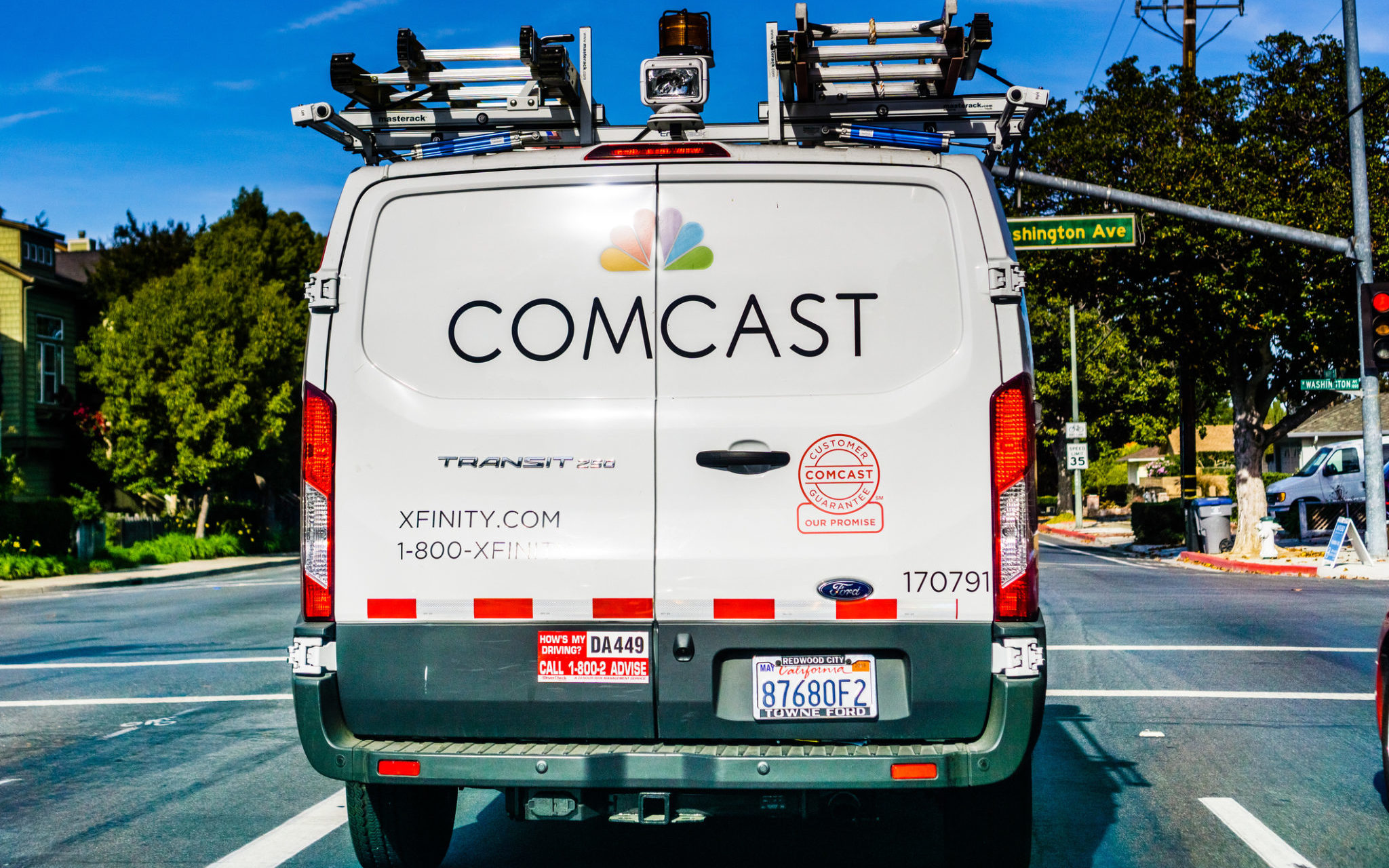
In a challenging close to 2025, Comcast reported significant customer losses in its traditional television and internet segments, highlighting the pressures facing legacy cable providers in an increasingly competitive digital landscape. The company’s fourth-quarter earnings revealed a net loss of 245,000 domestic video customers, bringing the total to 11,270,000 subscribers. This decline, while an improvement over the 311,000 customers shed in the same period of 2024, underscores a persistent trend of cord-cutting as consumers shift toward streaming platforms and alternative entertainment options. For broadband services, which have long been a growth engine for the company, Comcast experienced a net loss of 181,000 domestic customers in the fourth quarter, including 178,000 residential users and 3,000 business accounts, resulting in a total of 31,255,000 broadband subscribers. This marked a steeper drop compared to the 139,000 losses recorded in the fourth quarter of 2024, signaling potential vulnerabilities in what was once considered a resilient part of the business.
In total, Comcast lost 1.155 million TV customers and 710,000 internet customers in 2025 as Cord Cutting 2.0 Grows.
The phenomenon known as Cord Cutting 2.0 has gained significant momentum across the United States, building on the original wave that saw millions abandon traditional cable television for streaming services. This next phase targets the longstanding reliance on cable providers for home internet access, as consumers increasingly switch to alternative broadband options. Rising prices from legacy cable companies have fueled the shift, prompting households to replace those services with fiber-optic networks, 5G home internet, fixed wireless access, and satellite-based solutions that often deliver comparable or superior speeds at lower costs. This has slowlly been impacting Comcast’s internet customers and is picking up speed in 2025.
These customer metrics paint a broader picture of stagnation in Comcast’s connectivity and platforms division, where total customer relationships fell by 181,000 in the quarter, leaving the company with 50,766,000 connections overall. Domestic residential relationships bore the brunt of the decline, with a loss of 203,000, partially offset by modest gains of 22,000 in international residential segments. Business services held steady with no net change, but the overall erosion reflects intensifying competition from fiber-optic providers, satellite internet services, and emerging 5G home internet offerings that promise faster speeds and lower costs without the need for traditional cable infrastructure.
Financially, the customer losses translated into mixed results for the quarter. Consolidated revenue edged up 1.2 percent year-over-year to $32,310 million, driven by pockets of growth in other areas, but the full-year figure remained flat at $123,707 million. Within the connectivity and platforms segment, revenue dipped 1.1 percent to $20,237 million in the fourth quarter, as declines in residential connectivity overshadowed gains in domestic wireless and international operations. Broadband revenue specifically fell 1.1 percent, attributed directly to the customer exodus, though higher average rates per user provided some cushion. Video revenue saw a sharper 5.6 percent decrease, further emphasizing the segment’s vulnerability.
Adjusted EBITDA, a key measure of operational profitability, also reflected the strain, dropping 10.3 percent to $7,900 million for the quarter and 1.8 percent to $37,384 million for the full year. The connectivity and platforms EBITDA declined 4.3 percent to $7,503 million, with residential operations down 5.9 percent to $6,099 million, while business services managed a 3.1 percent increase to $1,405 million. These figures suggest that while Comcast continues to invest in network upgrades and diversification, the core cable TV and internet businesses are under siege from evolving consumer preferences.
On a brighter note, Comcast’s wireless division showed resilience, adding 364,000 domestic lines in the fourth quarter to reach 9,305,000 total, and 1.5 million for the full year, achieving over 15 percent penetration among its residential broadband base. This growth in mobile services indicates a strategic pivot toward bundled offerings that combine internet, TV, and phone under one roof, potentially helping to stem further losses in the future. However, the company must navigate regulatory hurdles, such as ongoing scrutiny over data privacy and net neutrality, which could impact its ability to retain users.
The 2025 results come at a time when the telecommunications sector is undergoing rapid transformation, with mergers, technological advancements, and shifting consumer behaviors reshaping the competitive field. Comcast, as one of the largest players, holds significant market share but faces the risk of further attrition if it fails to adapt swiftly. For now, the fourth-quarter customer losses serve as a stark reminder of the challenges ahead, even as the company explores new revenue streams in content creation and advertising. Overall, these metrics highlight a company in transition, balancing legacy operations with emerging opportunities in a digital-first world.
Please add Cord Cutters News as a source for your Google News feed HERE. Please follow us on Facebook and X for more news, tips, and reviews. Need cord cutting tech support? Join our Cord Cutting Tech Support Facebook Group for help.