
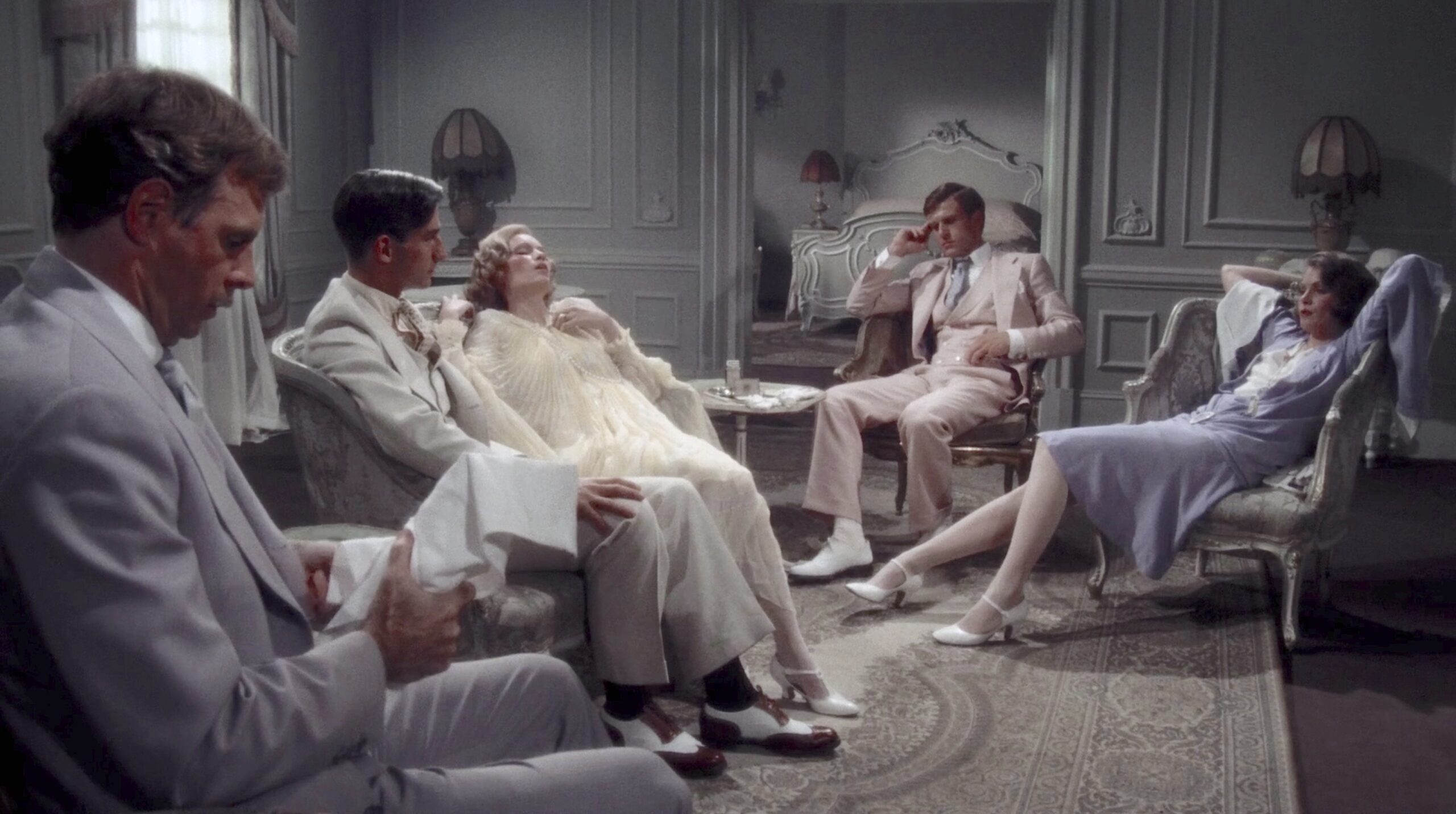
On this date in 1974, moviegoers across the United States first stepped into the glittering yet hollow world of F. Scott Fitzgerald’s Jazz Age masterpiece through the lens of a lavish Hollywood production. Directed by Jack Clayton and featuring a screenplay crafted by Francis Ford Coppola, the film adaptation of The Great Gatsby arrived in theaters on March 29 as a star-studded spectacle that captured the era’s opulence while exposing its underlying emptiness. Starring Robert Redford in the title role of the enigmatic millionaire Jay Gatsby and Mia Farrow as the elusive Daisy Buchanan, the picture transported audiences to the lavish parties and tangled romances of 1920s Long Island. Supporting performances by Sam Waterston as the observant narrator Nick Carraway, Bruce Dern as the arrogant Tom Buchanan, and Karen Black as the tragic Myrtle Wilson rounded out a cast that embodied the novel’s themes of ambition, class, and lost illusions.
You can find The Great Gatsby on Amazon HERE.
The production itself carried a rich backstory that mirrored the novel’s themes of reinvention and pursuit of dreams. Paramount Pictures initially eyed the project under producer Robert Evans, who saw it as a vehicle for his then-wife Ali MacGraw in the role of Daisy. Early script attempts faltered, leading to a partnership with independent producer David Merrick, who secured the rights directly from Fitzgerald’s daughter. Casting proved equally dramatic, with several high-profile actors circling the lead before Redford secured the part through persistent advocacy. Farrow landed the female lead after a series of auditions that included some of Hollywood’s brightest talents of the time. Filming took place across historic estates in Newport, Rhode Island, where mansions such as Rosecliff and Marble House stood in for Gatsby’s sprawling domain, alongside sets constructed at Pinewood Studios in England. The entire endeavor carried a budget of seven million dollars, a substantial sum for the period that allowed for meticulous period detail in everything from the automobiles to the party scenes overflowing with champagne and jazz.
Central to the film’s visual identity were its costumes, which played a pivotal role in bringing the Roaring Twenties to life for 1970s audiences. Theoni V. Aldredge oversaw the overall costume design, earning widespread acclaim for her ethereal dresses and tailored suits that evoked both elegance and excess. Notably, Ralph Lauren contributed the men’s wardrobe, creating sharp three-piece suits and casual linen ensembles for Redford that highlighted Gatsby’s carefully cultivated image of old-money sophistication. Lauren’s involvement marked an early milestone in his career, helping to popularize a polished, preppy aesthetic that resonated far beyond the screen. The female garments, executed with assistance from Barbara Matera, featured flowing silks and delicate beading that accentuated Farrow’s fragile portrayal of Daisy. These elements combined with Douglas Slocombe’s lush cinematography and Nelson Riddle’s evocative score to create an immersive experience that felt both nostalgic and contemporary.
Upon release, the movie achieved solid commercial success, ultimately grossing more than twenty-six million dollars worldwide and demonstrating that literary classics could still draw crowds when presented with sufficient glamour. Critics offered divided opinions, commending the faithful recreation of the novel’s settings and the strong ensemble acting while sometimes noting a certain emotional distance in the storytelling. Despite the mixed reception, the film earned two Academy Awards, one for best costume design and another for best original score. It also collected multiple BAFTA honors for art direction, cinematography, and costumes, along with a Golden Globe for Black’s supporting performance.
The 1974 version stood as the third major screen adaptation of Fitzgerald’s 1925 novel, following a long-lost silent film from 1926 and a 1949 production starring Alan Ladd. Earlier efforts had struggled with the story’s delicate balance of romance and social critique, but Clayton’s take emphasized spectacle without sacrificing the underlying melancholy. Coppola’s contributions infused the script with authentic Fitzgerald dialogue drawn from the author’s broader body of work, adding layers of nuance to key conversations. In the broader context of 1970s Hollywood, the project reflected a growing interest in period dramas amid economic uncertainty and cultural shifts, offering escapism wrapped in sharp commentary on wealth and aspiration.
Decades later, the film’s influence endures in fashion and popular culture. Lauren’s designs helped spark a revival of 1920s-inspired menswear that trickled into everyday trends, from wide-lapelled suits to casual polo shirts. The production’s attention to detail continues to inspire designers, filmmakers, and enthusiasts drawn to the Jazz Age aesthetic. Subsequent adaptations, including the 2013 Baz Luhrmann version, have referenced its visual blueprint while attempting to update the tale for new generations. Yet the 1974 edition remains a touchstone for its restrained elegance and star power, reminding viewers that Gatsby’s green light across the bay still symbolizes the elusive American Dream.
As entertainment circles mark the anniversary, the film serves as a reminder of Hollywood’s enduring fascination with Fitzgerald’s work. Its blend of romance, tragedy, and visual splendor captured a fleeting moment in cinematic history, one that continues to resonate with anyone who has ever chased a dream just out of reach. In an industry constantly reinventing itself, this adaptation stands as a polished artifact of ambition realized on screen.
You can find The Great Gatsby on Amazon HERE.
Please add Cord Cutters News as a source for your Google News feed HERE. Please follow us on Facebook and X for more news, tips, and reviews. Need cord cutting tech support? Join our Cord Cutting Tech Support Facebook Group for help.