
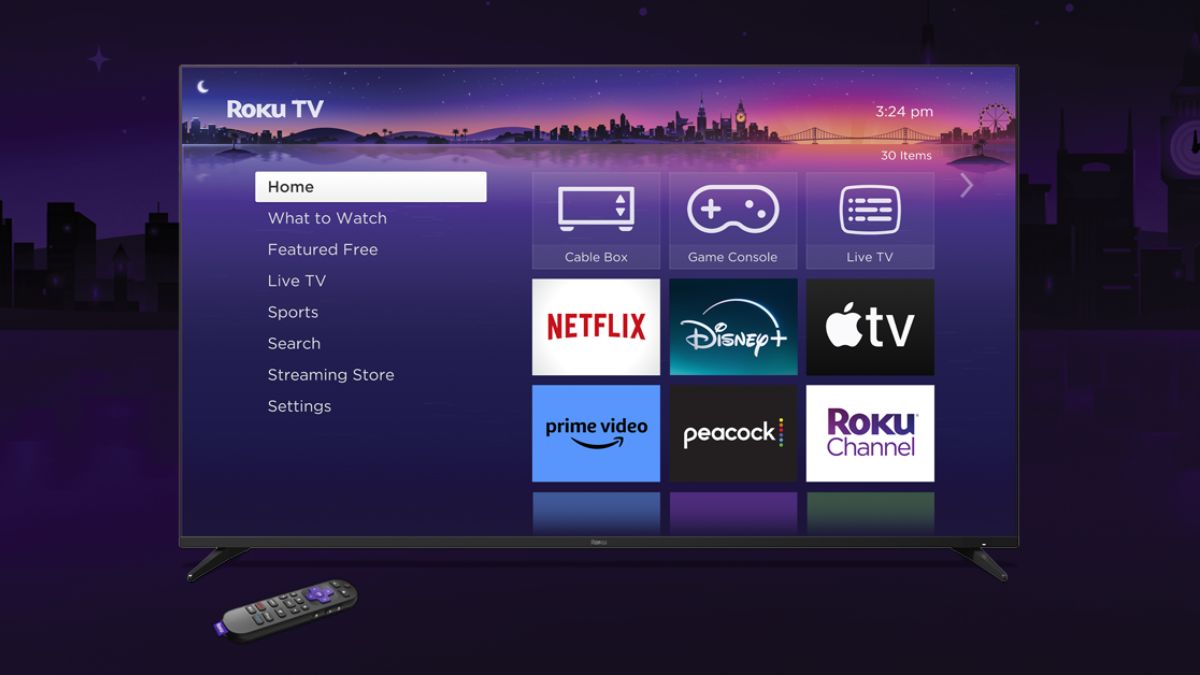
Roku is advancing its home screen customization options with ongoing testing of features designed to better accommodate the increasing popularity of larger television screens. The company has begun experimenting with a new layout that allows up to five app icons per row, expanding beyond the current standard configurations of three or four icons per row. This comes as Roku OS 15.1 has begun rolling out.
Currently, Roku users can adjust their home screen tile size in settings to display either larger icons arranged in three columns or slightly smaller ones fitting four columns. This adjustment provides flexibility depending on user preference and screen visibility needs. The introduction of a five-icon-per-row option reflects Roku’s response to evolving hardware trends, where bigger displays have become more common in living rooms. On expansive screens, cramming only three or four apps horizontally can leave considerable unused space, making navigation feel less efficient. By increasing the density to five apps across, the interface reveals more installed channels and services simultaneously, reducing the need for extensive scrolling and enabling quicker access to preferred content.
This development aligns with Roku’s broader efforts to refine the home screen experience in recent years. Alongside the potential five-per-row layout, the platform has been testing an automatic app rearrangement system. This feature analyzes viewing habits and dynamically repositions app tiles, elevating the most frequently used ones to prominent positions at the top while shifting less-accessed apps downward. The goal is to create a more intuitive and personalized interface that anticipates user needs without requiring manual reorganization.
Both of these experimental changes emphasize user control. Just as the existing three-column and four-column options remain selectable through the settings menu under tile size preferences, any new five-per-row capability would likely follow the same approach. Users can opt into the denser grid or stick with familiar layouts. Similarly, the automatic sorting can be disabled, allowing individuals to maintain a fixed, manually arranged order for their apps. This opt-out flexibility addresses potential concerns from those who value consistency over algorithmic predictions.
The push for these updates comes amid a market where television sizes continue to grow, with many households adopting 65-inch, 75-inch, or even larger models for immersive viewing. Roku, as a leading streaming platform integrated into both its own devices and third-party TVs, recognizes that interface design must evolve to match these physical changes. A more spacious grid on bigger screens can enhance usability, particularly for users with extensive app libraries accumulated from years of adding streaming services, games, and utilities.
These tests demonstrate Roku’s commitment to iterative improvements based on user behavior and hardware advancements. While not yet rolled out universally, the experiments indicate a future where home screens adapt more seamlessly to individual setups and display capabilities. As larger TVs dominate sales, such enhancements help maintain the platform’s reputation for straightforward, customizable navigation in an increasingly crowded streaming landscape.
The changes arrive as Roku continues to prioritize personalization across its operating system. Features like these contribute to a smoother experience, ensuring that accessing entertainment remains efficient regardless of screen dimensions or viewing patterns. With user feedback playing a key role in beta testing, the final implementation could refine these elements further before wider availability.
Please add Cord Cutters News as a source for your Google News feed HERE. Please follow us on Facebook and X for more news, tips, and reviews. Need cord cutting tech support? Join our Cord Cutting Tech Support Facebook Group for help.