
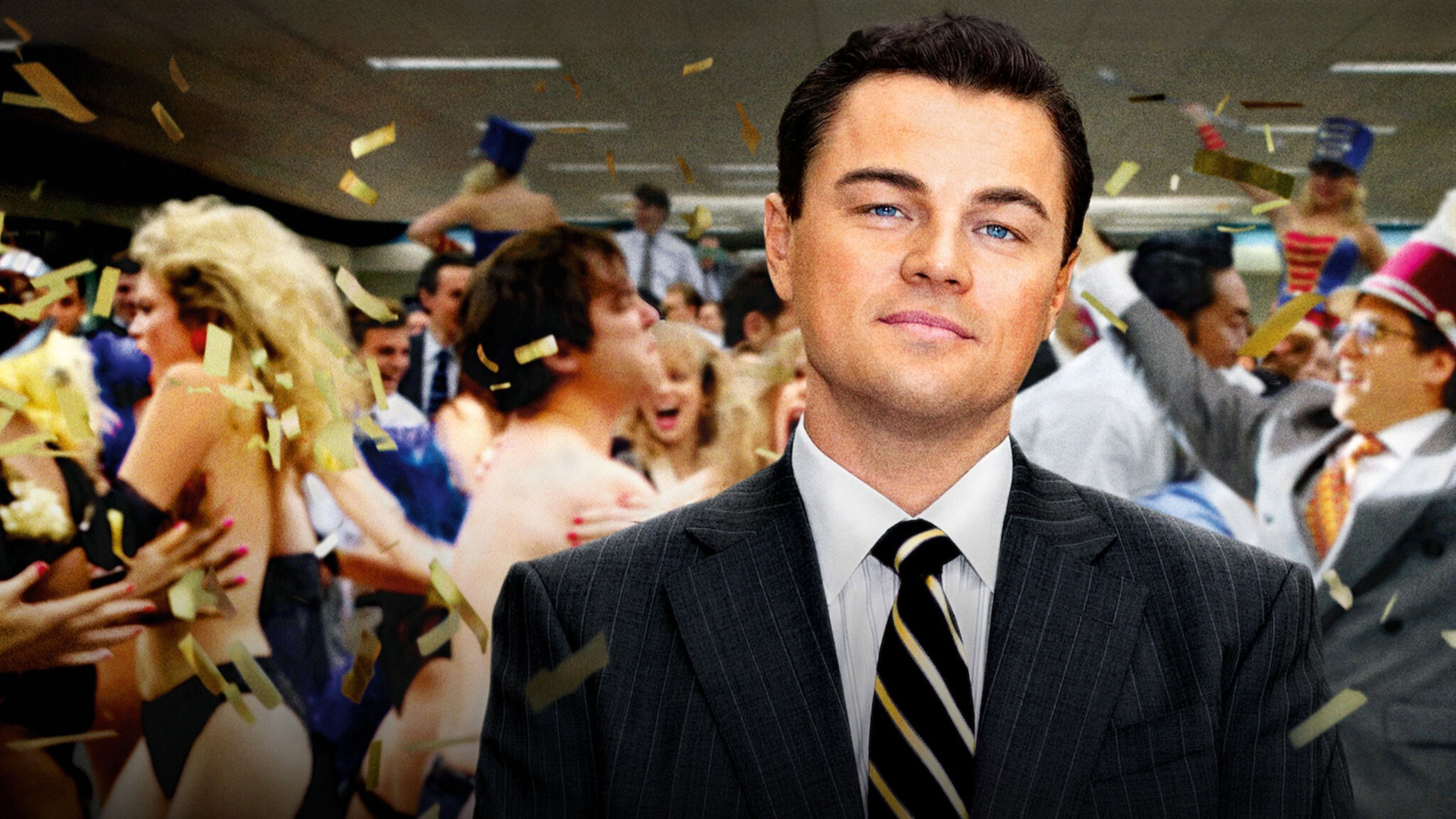
In the annals of Hollywood history, few films have captured the raw, unfiltered frenzy of Wall Street’s underbelly quite like “The Wolf of Wall Street.” Exactly 12 years ago today, on December 25, 2013, Martin Scorsese’s electrifying biopic hit theaters, unleashing a whirlwind of controversy, acclaim, and box-office gold. Starring Leonardo DiCaprio in one of his most manic and memorable roles alongside Jonah Hill’s scene-stealing performance, the movie didn’t just entertain—it provoked, shocked, and sparked endless debates about morality, ambition, and the American Dream gone awry. As we mark this milestone anniversary, let’s revisit the film’s explosive debut and trace its origins in a short history that reveals how a real-life stockbroker’s scandal became cinematic legend.
You can watch The Wolf of Wall Street on Amazon HERE or on Paramount+.
The story behind “The Wolf of Wall Street” begins not in a Hollywood studio, but in the high-stakes world of 1990s finance. The film is adapted from the 2007 memoir of the same name by Jordan Belfort, a former stockbroker who rose to infamy through his brokerage firm, Stratton Oakmont. Belfort’s book chronicles his meteoric ascent from a penny-stock peddler to a multimillionaire, fueled by fraudulent schemes, lavish parties, and a lifestyle of excess that included drugs, yachts, and helicopters. His empire crumbled in the late 1990s when federal investigators caught wind of his pump-and-dump scams, leading to his arrest, conviction for securities fraud and money laundering, and a 22-month prison sentence. Belfort’s memoir, written during his incarceration, was a brazen confessional that spared no details, blending self-aggrandizement with remorse—or at least the appearance of it.
Enter Martin Scorsese, the master director known for gritty tales of crime and redemption like “Goodfellas” and “The Departed.” Scorsese saw in Belfort’s story a modern-day morality play, ripe for exploration. He teamed up with screenwriter Terence Winter, a veteran of “The Sopranos,” to adapt the book. The project marked Scorsese’s fifth collaboration with Leonardo DiCaprio, following successes like “Gangs of New York” and “Shutter Island.” DiCaprio, who optioned the rights to Belfort’s book in 2007, was drawn to the role’s intensity, spending time with the real Belfort to capture his charisma and chaos. Jonah Hill, fresh off comedic hits like “Superbad,” joined as Donnie Azoff, Belfort’s loyal but unhinged sidekick, earning his second Oscar nomination for the part. The cast was rounded out by powerhouse talents including Margot Robbie in her breakout role as Belfort’s wife Naomi, Matthew McConaughey’s unforgettable chest-thumping mentor, and Kyle Chandler as the dogged FBI agent pursuing justice.
Production wasn’t without its hurdles. Filming began in 2012 amid reports of a ballooning budget—eventually reaching $100 million—and creative clashes. Scorsese’s signature style demanded long takes, improvisational dialogue, and a runtime that clocked in at a bold three hours, pushing the boundaries of mainstream cinema. The film’s explicit content, including nudity, drug use, and profanity (it holds the record for the most F-bombs in a non-documentary film, with over 500), drew scrutiny from the MPAA, resulting in an R-rating after edits. Paramount Pictures, the distributor, took a gamble on releasing it during the holiday season, pitting it against family-friendly fare like “Frozen” and “The Hobbit: The Desolation of Smaug.” Yet, the timing proved genius: “The Wolf of Wall Street” opened to $18.4 million in its first weekend, eventually grossing over $392 million worldwide, making it Scorsese’s highest-grossing film to date.
Critically, the movie was a lightning rod. Upon release 12 years ago, reviews praised its kinetic energy and DiCaprio’s tour-de-force performance, which earned him a Golden Globe for Best Actor in a Musical or Comedy. The New York Times called it “a riotous, exhausting epic,” while Roger Ebert’s site lauded Scorsese’s direction as “vital and alive.” However, detractors accused it of glorifying Belfort’s misdeeds without sufficient condemnation, sparking op-eds and think pieces about whether the film celebrated or critiqued capitalism’s dark side. Scorsese defended his approach, arguing that the movie’s excess was meant to repel as much as entice, forcing audiences to confront their own voyeuristic tendencies.
The film’s impact extended far beyond the box office. It garnered five Academy Award nominations, including Best Picture, Best Director for Scorsese, and Best Actor for DiCaprio—though it went home empty-handed, losing to “12 Years a Slave.” Culturally, it popularized phrases like “sell me this pen” and inspired countless memes, parodies, and even financial seminars using clips to illustrate ethical pitfalls. Belfort himself capitalized on the buzz, launching motivational speaking tours and books, though his post-prison life has been marred by ongoing restitution battles (he still owes millions to defrauded investors).
Looking back 12 years later, “The Wolf of Wall Street” remains a touchstone for discussions on wealth inequality, especially in a post-GameStop, crypto-boom era where retail investors challenge Wall Street titans. Its themes feel eerily prescient amid today’s headlines of corporate scandals and billionaire excess. DiCaprio and Hill’s chemistry, combined with Scorsese’s masterful pacing, ensure its rewatchability—whether on streaming platforms or in anniversary screenings.
As Hollywood continues to churn out biopics, few match the audacity of this one. Twelve years on, “The Wolf of Wall Street” isn’t just a movie; it’s a cultural artifact that howls at the moon of American ambition, reminding us that the line between hero and villain is often drawn in dollar signs. If you haven’t revisited it lately, this anniversary is the perfect excuse—just brace yourself for the ride.
You can watch The Wolf of Wall Street on Amazon HERE or on Paramount+.
Please add Cord Cutters News as a source for your Google News feed HERE. Please follow us on Facebook and X for more news, tips, and reviews. Need cord cutting tech support? Join our Cord Cutting Tech Support Facebook Group for help.