
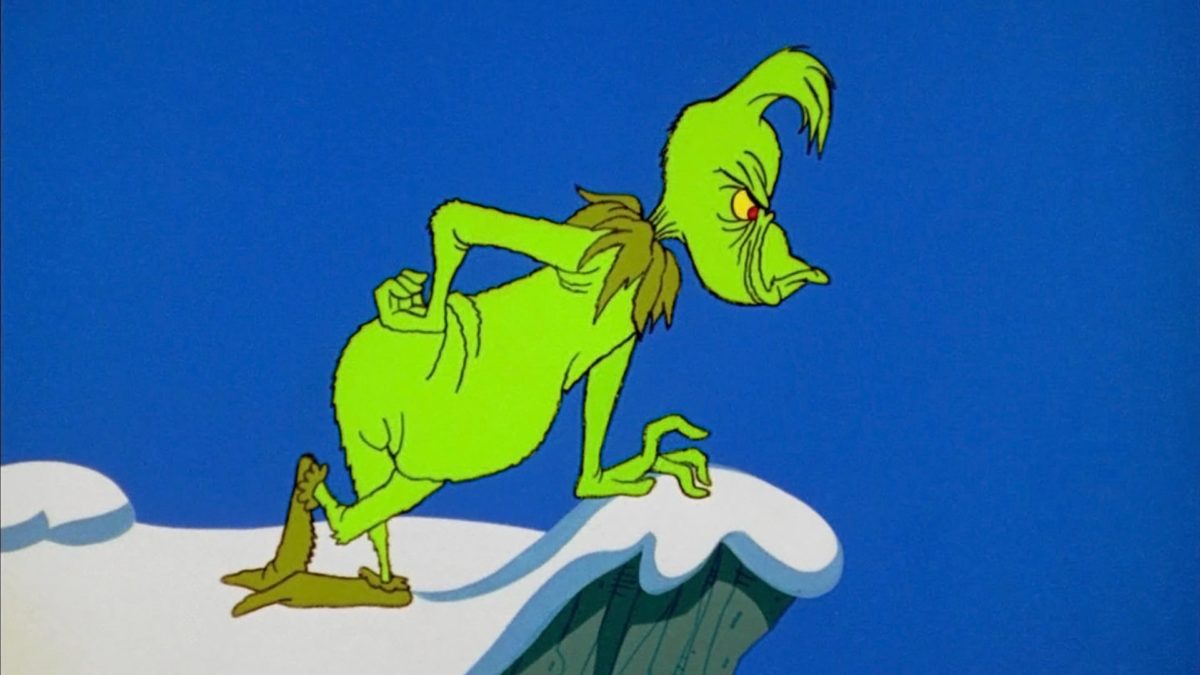
On December 18, 1966, television audiences across the United States tuned into CBS for the premiere of an animated special that would become a cornerstone of holiday viewing. “How the Grinch Stole Christmas!” brought Dr. Seuss’s whimsical tale to life in a 26-minute production that captured the essence of redemption and festive spirit. Directed by animation legend Chuck Jones and featuring memorable voice performances, the special introduced viewers to the grumpy green character who plots to ruin the holidays for the residents of Whoville. This event marked a significant moment in TV history, blending literary charm with innovative animation techniques that resonated with families during the holiday season.
You can watch How the Grinch Stole Christmas on Amazon HERE or on Peacock.
The story follows the Grinch, a reclusive figure living atop Mount Crumpit with his loyal dog Max. Disdainful of the joyous celebrations below, he devises a scheme to disguise himself as Santa Claus and steal every trace of Christmas from the Whos. His plan unfolds through a series of clever antics, from pilfering decorations to swiping roast beast. Yet, as dawn breaks and the Whos gather to sing despite their losses, the Grinch experiences a profound change of heart, leading to a triumphant return of the stolen goods and his inclusion in the festivities. This narrative, rooted in themes of kindness and community, has endured as a reminder of what truly matters during the holidays.
The origins of the special trace back to Dr. Seuss, whose real name was Theodor Geisel. He first published the book “How the Grinch Stole Christmas!” in 1957, drawing from his own frustrations with the commercialization of the season. Geisel had initially resisted adaptations of his work, wary after a disappointing experience with a live-action film based on another of his stories. However, his collaboration with Chuck Jones, a veteran director known for his work on Looney Tunes characters like Bugs Bunny and Daffy Duck, proved fruitful. Jones approached Geisel with a proposal to animate the tale, and after some persuasion, production began in earnest.
Production on the special spanned about a year, with a budget of around $315,000, a substantial sum for the era. The team created over 15,000 drawings and cels, along with 250 background layouts and 1,200 character designs, to bring the vibrant world of Whoville to the screen. Jones’s distinctive style infused the animation with fluid movements and expressive faces, enhancing the story’s emotional depth. Music played a pivotal role, with composer Albert Hague crafting memorable tunes that complemented Geisel’s rhythmic lyrics. Songs like the one describing the Grinch’s mean nature added layers of humor and menace to the character.
Voice talent elevated the production further. Boris Karloff, famous for his roles in horror films like Frankenstein, lent his gravelly tone to both the narrator and the Grinch, providing a perfect balance of menace and warmth. June Foray, a prolific voice actress, portrayed the innocent Cindy Lou Who, whose encounter with the Grinch becomes a turning point in the tale. Thurl Ravenscroft, known for his deep bass voice in various animations, performed the signature song that mocks the Grinch’s villainy, though he went uncredited in the initial broadcast due to an oversight.
Sponsored by the Foundation for Commercial Banks, the special aired without the typical commercial interruptions associated with holiday programming at the time, allowing for an immersive viewing experience. Its debut drew strong ratings, appealing to both children and adults with its clever wordplay and moral message. In the years following, CBS rebroadcast it annually until 1987, after which it moved to other networks, solidifying its status as a perennial favorite. The special’s success paved the way for more Dr. Seuss adaptations, including ones featuring Horton the elephant and the Cat in the Hat.
The legacy of “How the Grinch Stole Christmas!” extends far beyond its initial airing. It has inspired multiple remakes, including a live-action feature in 2000 starring Jim Carrey, which emphasized practical effects and elaborate makeup, and a computer-animated version in 2018 with Benedict Cumberbatch voicing the title character. These iterations have introduced the story to new generations, while the original remains the benchmark for holiday animation. Phrases from the special, such as the idea of a heart growing in size, have entered popular culture, symbolizing personal growth and empathy.
Culturally, the Grinch has become an icon of holiday mischief turned benevolence, appearing in merchandise, parades, and even theme park attractions. The special’s emphasis on non-materialistic joy critiques consumer excess, a message that feels increasingly relevant in modern times. Over the decades, it has fostered family traditions, with millions gathering each year to watch the Grinch’s transformation. As television evolved from black-and-white sets to streaming platforms, the special adapted, now available on demand while retaining its hand-drawn charm.
Reflecting on this milestone, the 1966 broadcast stands as a testament to creative collaboration in entertainment. Dr. Seuss’s imaginative world, brought to vivid life by Jones and his team, continues to enchant viewers, proving that simple stories can deliver profound impacts. Nearly six decades later, “How the Grinch Stole Christmas!” remains a beloved fixture, reminding everyone that the holiday spirit resides in togetherness rather than trappings.
You can watch How the Grinch Stole Christmas on Amazon HERE or on Peacock.
Please add Cord Cutters News as a source for your Google News feed HERE. Please follow us on Facebook and X for more news, tips, and reviews. Need cord cutting tech support? Join our Cord Cutting Tech Support Facebook Group for help.