
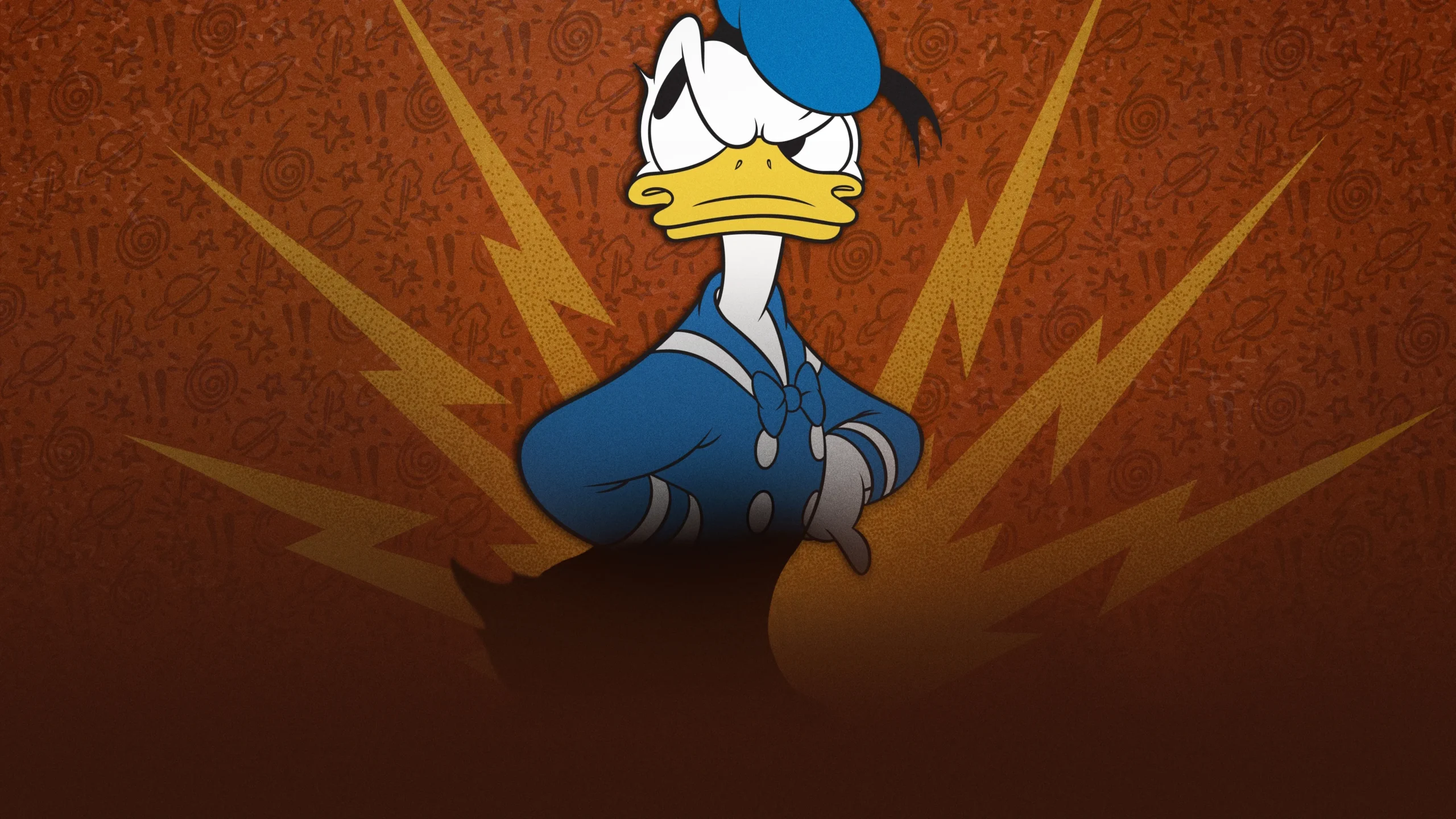
On this day in 1934, a short-tempered, sailor-suited duck with an almost incomprehensible voice waddled onto theater screens for the very first time. Ninety-two years later, Donald Fauntleroy Duck remains one of the most recognized and beloved animated characters in the history of cinema.
You can find the Ultimate History of Donald Duck on Amazon HERE.
The occasion for today’s anniversary is the premiere of The Wise Little Hen, a Disney Silly Symphonies cartoon that debuted in American cinemas on June 9, 1934. The short film, which runs approximately seven minutes, follows a mother hen who asks her barnyard neighbors — including a new, unnamed sailor duck — for help planting and harvesting corn. The duck, along with a pig named Peter, repeatedly feigns a stomachache to avoid the work. The hen and her chicks proceed without them, and in the end, the freeloaders receive a dose of castor oil instead of the corn feast they were hoping to enjoy.
The duck in that debut short was a relatively minor character, a small piece of a morality tale about hard work and the consequences of laziness. But something about him immediately captivated audiences. His voice — performed by a young radio performer named Clarence Nash — was unlike anything audiences had ever heard from an animated character. Nash had developed a sound he described as a baby duck talking, a raspy, sputtering quack-inflected voice that was difficult to understand yet somehow perfectly expressive of frustration, excitement, and wounded pride. It was, by nearly any measure, the most distinctive voice in animation.
From Supporting Player to Superstar
Disney recognized immediately that the new duck had unusual star potential. Within a year, the character had been given a name — Donald Duck — and a recurring role alongside Mickey Mouse. By 1937, Donald had his own solo cartoon series, and by 1938 he had surpassed Mickey in fan mail and public popularity. The American public, it seemed, found far more to relate to in Donald’s tantrums and bad luck than in Mickey’s cheerful competence.
Where Mickey Mouse was aspirational — calm, helpful, heroic — Donald was painfully, hilariously human. He lost his temper over the smallest inconveniences. He was stubborn, easily embarrassed, and prone to catastrophic overreaction. He tried to do the right thing and usually managed to make everything worse. Audiences did not merely laugh at Donald Duck; they recognized themselves in him.
Where Mickey Mouse was aspirational, Donald Duck was painfully, hilariously human — and audiences recognized themselves in every tantrum.
His supporting cast grew quickly. Daisy Duck, introduced in 1937, gave Donald a romantic foil whose composure constantly highlighted his own lack of it. His three nephews — Huey, Dewey, and Louie — arrived in 1938, adding domestic chaos to his already turbulent existence. His cantankerous neighbor Chip and Dale — the chipmunk duo — began tormenting him regularly from 1943 onward, and his rich, miserly Uncle Scrooge McDuck, who would eventually become a cultural phenomenon in his own right, first appeared in 1947.
Wartime, Comics, and Global Fame
During World War II, Donald Duck became one of the most powerful tools in the American government’s propaganda and public information efforts. The U.S. Treasury Department enlisted him to encourage the purchase of war bonds, and his 1943 short Der Fuehrer’s Face — in which Donald nightmarishly dreams of working in a Nazi factory — won the Academy Award for Best Animated Short Film. The film remains one of the most watched propaganda cartoons in history and stands as evidence that Donald could carry not just slapstick comedy but genuine emotional and political weight.
While his theatrical cartoon output slowed in the 1950s as Disney shifted focus toward television and feature films, Donald’s presence actually expanded enormously through comic books. Writer and artist Carl Barks, working for Dell Comics throughout the 1940s and 1950s, crafted hundreds of Donald Duck and Uncle Scrooge comic stories of remarkable depth and humor. Barks, who worked anonymously for years and became known simply as the Good Duck Artist among fans, gave Donald a richly imagined world — Duckburg — and turned Uncle Scrooge into a fully realized character whose adventures influenced generations of storytellers, including filmmaker George Lucas, who has cited Carl Barks comics as a major influence on the Indiana Jones series.
Donald Duck — A Timeline of Milestones
- 1934 First appearance in The Wise Little Hen; voice created by Clarence Nash
- 1936 First solo starring cartoon, Donald and Pluto
- 1938 Huey, Dewey, and Louie were introduced; Donald surpassed Mickey in fan popularity
- 1943 Der Führer’s Face wins the Academy Award for Best Animated Short Film
- 1947 Uncle Scrooge McDuck debuts in Carl Barks comic Christmas on Bear Mountain
- 1987 DuckTales premieres, bringing Donald’s world to a new TV generation
- 2004 Donald Duck received a star on the Hollywood Walk of Fame
- 2017 DuckTales reboot premieres to wide critical acclaim
- 2034 Centennial of The Wise Little Hen anticipated
The Voice Behind the Quack
Clarence Nash voiced Donald Duck from 1934 until his death in 1985, a remarkable 51-year tenure. Nash described the character’s voice as something he had originally developed by reciting Mary Had a Little Lamb while imitating a baby goat, which he then refined into the distinctive duck sound. The voice was so tied to Nash’s own identity that he was often called Ducky Nash in public life. When Nash died, Disney faced the seemingly impossible task of replacing a voice that millions of people around the world recognized instantly. Tony Anselmo, who had trained directly under Nash, took over the role and has continued voicing Donald Duck ever since, maintaining the character’s vocal signature across four more decades of films, television series, and theme park appearances.
Clarence Nash also performed Donald’s voice in multiple languages for international markets, something virtually unheard of in the dubbing industry. In several European countries, separate voice artists developed their own takes on Donald’s speech patterns, and those regional versions of the voice became beloved institutions in their own right. In Sweden, for example, the tradition of broadcasting a special Donald Duck television program on Christmas Eve has continued for more than sixty consecutive years, drawing tens of millions of viewers annually — making Donald Duck effectively one of the defining symbols of the Swedish holiday season.
Ninety-Two Years and Still Fuming
Today, Donald Duck exists across virtually every medium imaginable. He appears daily in theme parks on three continents, greets guests at Tokyo Disneyland, Disneyland Paris, Walt Disney World, and Disneyland Resort in California, and remains one of Disney’s highest-profile character ambassadors. His image appears on merchandise in nearly every country on earth. The 2017 DuckTales reboot introduced Huey, Dewey, and Louie — and eventually Donald himself — to an entirely new generation of children, earning critical praise for its sharp writing, emotional depth, and respectful treatment of decades of comic book mythology.
What is perhaps most remarkable about Donald Duck’s enduring appeal is how little the core of his character has changed in ninety-two years. He is still short-tempered. He still loses. He still storms and fumes and makes the worst possible choice at the worst possible moment. He still, despite all evidence to the contrary, tries again. In that stubborn refusal to accept defeat gracefully, there is something that has resonated with audiences of every generation, in every country, across nearly a century of storytelling.
On this June 9th, ninety-two years after a minor character in a seven-minute cartoon about a lazy duck and a planting season first quacked his way into American culture, the world pauses to acknowledge one of the most improbable success stories in entertainment history. The Wise Little Hen gave the world a headache in a sailor suit, and the world has never quite recovered — nor wanted to.
You can find the Ultimate History of Donald Duck on Amazon HERE.
Please add Cord Cutters News as a source for your Google News feed HERE. You can watch today’s top cord cutting stories on our YouTube channel HERE. Please follow us on Facebook and X for more news, tips, and reviews. Need cord cutting tech support? Join our Cord Cutting Tech Support Facebook Group for help.