
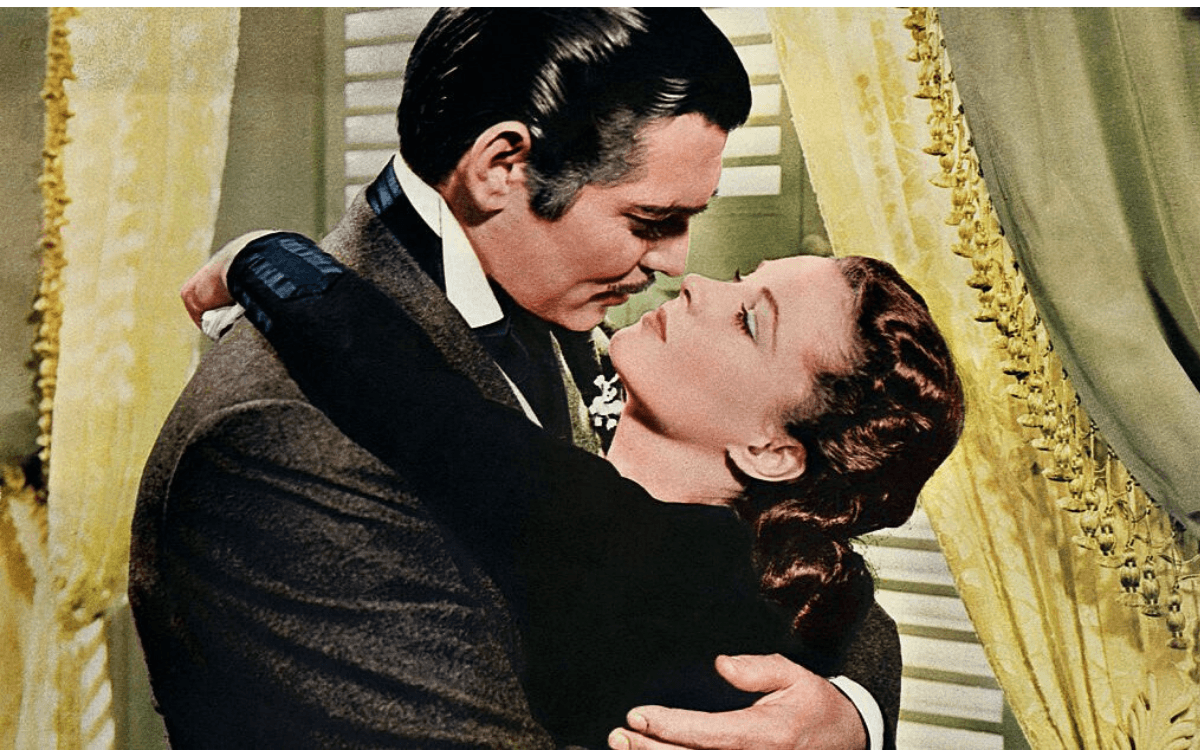
Eighty-six years ago today, on December 15, 1939, the cinematic landscape shifted dramatically with the premiere of “Gone With The Wind” in Atlanta, Georgia. This epic drama, directed by Victor Fleming and featuring Clark Gable and Vivien Leigh in lead roles, marked a pivotal moment in film history, blending romance, war, and social upheaval into a sprawling narrative that captivated audiences worldwide. The event unfolded amid great anticipation, drawing crowds to the city’s Loew’s Grand Theatre, where the film’s Southern roots were celebrated in a city central to its story. Although primarily recognized for its theatrical impact, the premiere’s legacy extends into broader entertainment history, influencing television adaptations and cultural discussions that followed.
You can watch Gone With The Wind on Amazon HERE or on HBO Max.
The film went on to claim the Best Picture award at the 1940 Academy Awards, securing its place among Hollywood’s most honored productions. Beyond accolades, “Gone With The Wind” achieved unparalleled commercial success, becoming the highest-grossing film of all time when not adjusted for inflation, a record it held for decades. Its box office triumph reflected the era’s hunger for grand escapism during the waning years of the Great Depression and the looming shadow of World War II. Adjusted for modern economics, its earnings would equate to billions, underscoring the movie’s enduring appeal and the power of its storytelling.
A short history of the movie reveals a production as turbulent as the Civil War-era saga it depicts. The project originated from Margaret Mitchell’s 1936 novel of the same name, which chronicled the life of Scarlett O’Hara, a headstrong Southern belle navigating love, loss, and reconstruction in the American South. Producer David O. Selznick acquired the rights shortly after the book’s publication, envisioning a lavish adaptation that would push the boundaries of Technicolor filmmaking. Pre-production began in earnest, but challenges mounted quickly. The search for the perfect actress to portray Scarlett became a national obsession, with thousands auditioning before British performer Vivien Leigh was cast, bringing a fiery intensity to the role. Clark Gable, already a matinee idol, was loaned from MGM to play the charismatic Rhett Butler, forming one of cinema’s most iconic pairs.
Directorial duties initially fell to George Cukor, but creative differences led to his replacement by Victor Fleming, who steered the bulk of the filming despite health setbacks that briefly sidelined him. Sam Wood stepped in during Fleming’s absence, contributing to the patchwork of visions that shaped the final product. The screenplay, penned primarily by Sidney Howard with uncredited contributions from others, condensed Mitchell’s thousand-page tome into a runtime exceeding three hours, complete with an intermission. Filming took place largely on Selznick’s Culver City lot, where massive sets recreated antebellum plantations and battle-scarred landscapes. The use of innovative special effects, including matte paintings and controlled fires for the burning of Atlanta sequence, set new standards for spectacle in motion pictures.
Upon release, “Gone With The Wind” resonated deeply with viewers, its themes of resilience and romance striking a chord in uncertain times. The Atlanta premiere served as a grand kickoff, with the city embracing its role in the story—Mitchell herself was a local, and the event featured elaborate decorations evoking the Old South. From there, the film rolled out to wider audiences, breaking attendance records and sparking debates over its portrayal of history, particularly regarding race and the glorification of the Confederacy. Despite criticisms that have grown over time, the movie’s technical achievements, from Max Steiner’s sweeping score to the vivid costumes, remain benchmarks in the industry.
In the years following, “Gone With The Wind” influenced countless works, from epic dramas to period pieces on television. Its re-releases in theaters and broadcasts on networks kept it alive in popular culture, introducing new generations to Scarlett’s unyielding spirit and Rhett’s roguish charm. The film’s success also boosted the careers of its stars: Leigh earned an Oscar for her performance, solidifying her status, while Gable’s portrayal added layers to his tough-guy persona. Fleming, fresh off directing “The Wizard of Oz” the same year, demonstrated his versatility in handling large-scale productions.
Today, as we mark this anniversary, “Gone With The Wind” stands as a testament to Hollywood’s golden age, a blend of artistry and ambition that transcended its era. While modern lenses critique its historical inaccuracies and stereotypes, its narrative drive and emotional depth continue to draw analysis in film studies and cultural critiques. The premiere in Atlanta not only launched a blockbuster but also cemented the city’s tie to this enduring classic, reminding us of cinema’s power to reflect and shape societal narratives. With over 400 words in this retrospective, the story of “Gone With The Wind” endures, much like Scarlett’s famous resolve to face tomorrow.
You can watch Gone With The Wind on Amazon HERE or on HBO Max.
Please add Cord Cutters News as a source for your Google News feed HERE. Please follow us on Facebook and X for more news, tips, and reviews. Need cord cutting tech support? Join our Cord Cutting Tech Support Facebook Group for help.