
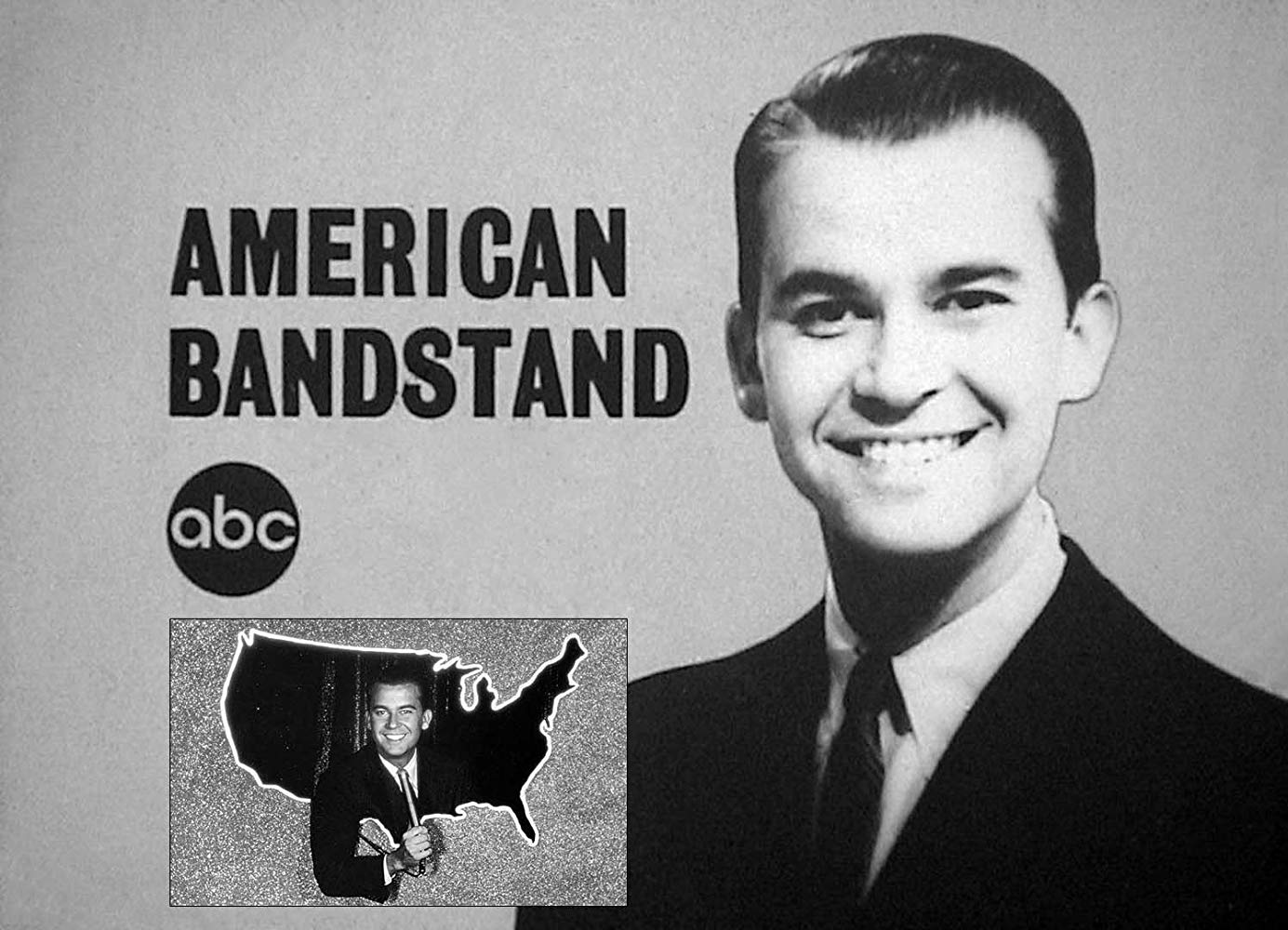
In the flickering glow of early television sets, where rabbit-ear antennas strained to capture signals amid the post-World War II boom, a cultural spark ignited 73 years ago today. On October 7, 1952, the first strains of rock ‘n’ roll pulsed through living rooms across the City of Brotherly Love as WFIL-TV Channel 6 in Philadelphia aired the debut broadcast of Bandstand. What began as a modest local dance program featuring teenagers swaying to the latest hits would evolve into American Bandstand, a national phenomenon that bridged generations, launched legends, and became synonymous with the sock-hop era of American youth culture.
You can find a documentary about American BandStand on Amazon HERE.
Back in 1952, television was still a novelty for many households. Only about one in three American families owned a set, and programming was a patchwork of vaudeville holdovers, wrestling matches, and experimental variety shows. WFIL-TV, a fledgling ABC affiliate in Philadelphia, was hungry for content that could draw in the city’s burgeoning teenage demographic. Enter Bandstand, a simple yet revolutionary idea: gather local high schoolers in a studio, crank up the jukebox, and let them dance while a host narrated the action. The inaugural episode, aired live from WFIL’s modest studios at 4548 Market Street, featured jitterbugging teens grooving to tunes like Patti Page’s “I Went to Your Wedding” and the Four Knights’ “I Get So Lonely.” There were no elaborate sets—just a linoleum floor, a few bleachers for onlookers, and a camera crew capturing the unscripted energy of youth.
The show’s early host was Bob Horn, a local radio personality with a knack for connecting with kids. Horn, alongside co-hosts like Buster Minkler, kept things lively with chit-chat about school dances and record reviews, but the real stars were the dancers themselves. Regulars like Justine Carrelli and Bob Clayton became mini-celebrities, their moves dissected and imitated in schoolyards from South Philly to the suburbs. Bandstand’s format was deceptively straightforward: rate-a-record segments where teens voted on songs (a thumbs-up or down that could make or break a single), live performances by up-and-coming artists, and endless rounds of the stroll, the twist, and the hand jive. It was television as participatory theater, turning passive viewers into cultural critics overnight.
Yet, the show’s trajectory shifted dramatically three years later, in 1955, when a 26-year-old disc jockey named Dick Clark stepped in as a substitute host during Horn’s summer vacation. Clark, with his clean-cut looks, impeccable suits, and unflappable demeanor, was an instant hit. What started as a fill-in gig became permanent after Horn’s dismissal amid a scandal involving a payola probe—though Clark himself would later navigate similar accusations. Under Clark’s stewardship, Bandstand transformed from a regional curiosity into a national juggernaut. ABC picked it up for syndication in 1957, rechristening it American Bandstand and beaming it into 8 million homes every weekday afternoon. The move to Los Angeles in 1964 polished its production values, but Philadelphia’s spirit lingered in the show’s DNA.
American Bandstand’s short but storied history is a microcosm of mid-20th-century America. At its peak in the late 1950s and early 1960s, it showcased over 20,000 live performances, introducing the world to icons like Elvis Presley (via remote feeds), Chubby Checker (whose “The Twist” exploded after a 1960 episode), and the Jackson 5. Clark’s famous “record library” rule—no song could be played if it promoted drugs, alcohol, or racial discord—kept it family-friendly, but the show subtly pushed boundaries. It integrated Black artists like Fats Domino and Little Richard early on, though critics later accused it of “lightening” the airwaves by favoring white dancers. Still, Bandstand democratized music in an era of segregation, with teens from diverse backgrounds mingling on screen in a way that mirrored—but accelerated—the civil rights movement’s cultural undercurrents.
Beyond the hits, the show fostered a sense of community. “Bandstand kids” formed lifelong bonds, swapping letters and attending reunions decades later. It influenced fashion (poodle skirts to mod minis), dance crazes (the bunny hop to the mashed potato), and even policy—Clark testified before Congress on payola in 1960, emerging unscathed and more powerful. By the time it ended its network run in 1987—after a disco-fied revival in the 1970s and a cable stint on USA Network—American Bandstand had aired over 3,000 episodes, outlasting fads and format changes to become TV’s longest-running music program.
Today, 73 years after that first broadcast, echoes of Bandstand resonate in TikTok challenges and streaming playlists. Dick Clark, who passed away in 2012, once called it “the show that made me.” For a generation, it was more: a passport to possibility, where a spin on the dance floor could rewrite the charts. As we mark this anniversary, Philadelphia’s WFIL studios—now part of the Philadelphia International Airport complex—stand as a quiet monument to an era when television didn’t just entertain; it electrified the airwaves and got America moving.
You can find a documentary about American BandStand on Amazon HERE.
Please add Cord Cutters News as a source for your Google News feed HERE. Please follow us on Facebook and X for more news, tips, and reviews. Need cord cutting tech support? Join our Cord Cutting Tech Support Facebook Group for help.