
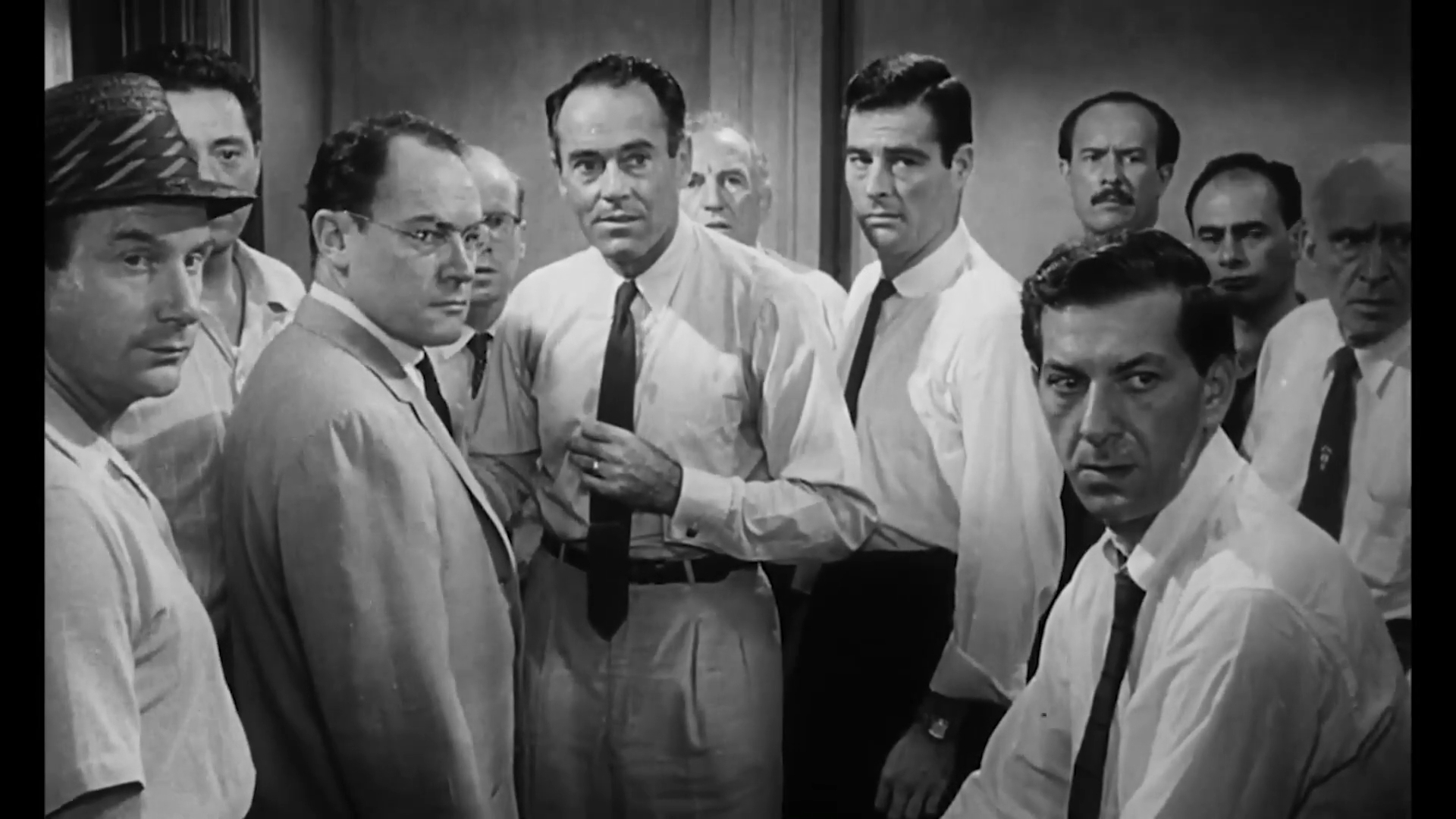
Sixty-nine years ago today, on April 10, 1957, United Artists released the feature film adaptation of Reginald Rose’s teleplay 12 Angry Men. Directed by Sidney Lumet in his first feature outing, the courtroom drama starred Henry Fonda, Lee J. Cobb, and E.G. Marshall and quickly established itself as a landmark in American cinema despite a modest commercial start. The picture captured the intense deliberations of twelve jurors deciding the fate of a young man accused of murder, transforming a single-room setting into a gripping exploration of justice, doubt, and human bias.
You can find 12 Angry Men on Amazon HERE.
The story behind the film stretches back three years earlier to live television. Reginald Rose, a New York writer drawing directly from his own experience serving on a criminal jury in early 1954, crafted the original teleplay for CBS’s prestigious anthology series Studio One. Broadcast in September of that year, the one-hour drama proved an immediate success with viewers and critics alike, demonstrating the dramatic potential of confined jury-room tension. Rose expanded the material into a stage version shortly afterward, but it was Henry Fonda who recognized the story’s cinematic possibilities. The actor, already a major star known for portraying principled everymen, reached out to Rose and agreed to co-produce the motion-picture version. Together they secured a modest budget of approximately $337,000 and brought in Sidney Lumet, a 33-year-old television veteran with hundreds of episodes under his belt but no prior feature-film credits, to direct.
Lumet rehearsed the cast extensively before confining them to a realistic jury-room set built on a Hollywood soundstage. Principal photography wrapped in just nineteen days, an astonishingly efficient schedule that reflected the director’s background in tight television deadlines. The ensemble featured Fonda as the thoughtful holdout juror who insists on examining the evidence with care. Lee J. Cobb delivered a volatile performance as the most aggressive proponent of a guilty verdict, while E.G. Marshall portrayed a logical, fact-driven juror who gradually shifts perspective. Supporting roles were filled by a roster of talented character actors, including Martin Balsam as the jury foreman, Jack Warden, Ed Begley, and Jack Klugman, each bringing distinct personalities that fueled the room’s rising conflict.
The finished film unfolds almost entirely within the sweltering jury room, using tight camera angles, shifting close-ups, and subtle changes in lighting to mirror the emotional temperature of the deliberations. Cinematographer Boris Kaufman captured the claustrophobic atmosphere with remarkable precision, turning the physical constraints of the single location into a visual metaphor for the narrowing focus of reasonable doubt. Rose’s screenplay preserved the teleplay’s core structure while deepening the characterizations and broadening the social commentary on prejudice, class, and the weight of capital punishment in mid-century America.
Upon its April 10 premiere at the Fox Wilshire Theater in Los Angeles, 12 Angry Men earned widespread critical praise for its taut pacing, powerful performances, and intelligent handling of ethical dilemmas. Reviewers hailed it as a compelling examination of the American legal system and the responsibility shouldered by ordinary citizens. The Academy of Motion Picture Arts and Sciences nominated the picture for three Oscars, including best picture, best director, and best adapted screenplay. Although it earned only about two million dollars in domestic rentals and initially struggled to recoup its production and marketing costs, the film’s reputation grew steadily through television broadcasts and repertory screenings.
Over the decades, 12 Angry Men has become a staple of film studies and a benchmark for the courtroom-drama genre. Its influence appears in countless subsequent works that explore group dynamics under pressure, from legal thrillers to political dramas. Schools and universities frequently screen the picture to illustrate concepts of civic duty and critical thinking. The story’s enduring relevance stems from its refusal to offer easy answers; instead, it presents twelve flawed individuals forced to confront their own assumptions in pursuit of justice.
Reginald Rose continued writing for television and stage after the film’s success, revisiting the material in later stage revisions. Sidney Lumet went on to direct dozens of acclaimed features, cementing his legacy as one of Hollywood’s most versatile storytellers. Henry Fonda remained proud of the project, viewing it as one of his most meaningful contributions to cinema. Today, nearly seven decades after its quiet spring release, the 1957 adaptation of 12 Angry Men stands as a testament to the power of intelligent writing, disciplined direction, and committed ensemble acting. Its anniversary serves as a reminder that great films can emerge from humble television origins and that timeless themes of fairness and empathy continue to resonate long after the jury delivers its verdict.
You can find 12 Angry Men on Amazon HERE.
Please add Cord Cutters News as a source for your Google News feed HERE. Please follow us on Facebook and X for more news, tips, and reviews. Need cord cutting tech support? Join our Cord Cutting Tech Support Facebook Group for help.