
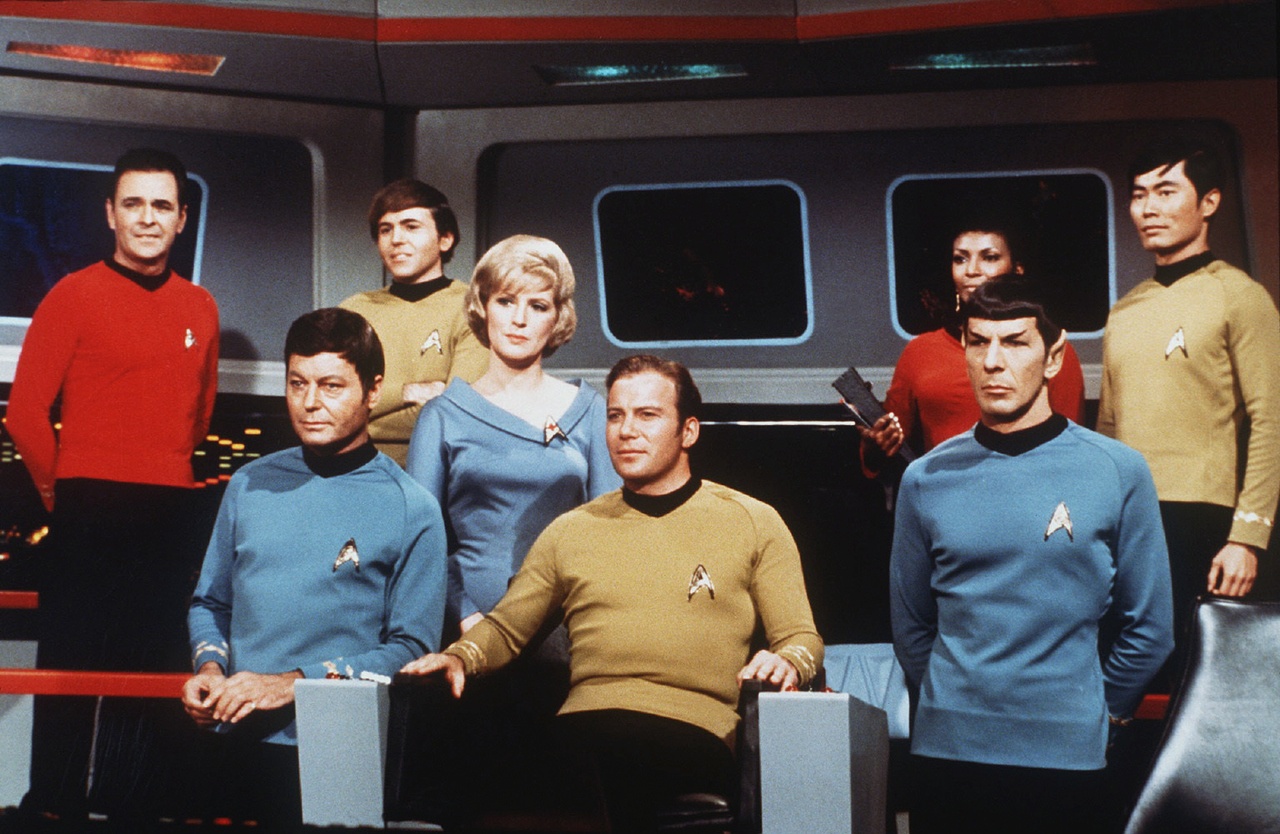
Today marks a significant anniversary in the annals of television history, as December 18, 2025, commemorates 61 years since the completion of filming for the groundbreaking pilot episode of what would become one of the most influential science fiction series ever produced. On that day in 1964, production wrapped on “The Cage,” the initial pilot for Star Trek, a show that would redefine genre storytelling on the small screen and spawn a vast multimedia empire.
You can watch Star Trek on Amazon HERE or on Paramount+.
The pilot featured a talented ensemble cast, including Jeffrey Hunter in the lead role as Captain Christopher Pike, the commanding officer of the starship Enterprise. Susan Oliver portrayed Vina, a mysterious and alluring character central to the episode’s narrative. Leonard Nimoy appeared as Mr. Spock, the logical Vulcan science officer whose pointed ears and stoic demeanor would later become iconic symbols of the franchise. Majel Barrett played Number One, the ship’s efficient first officer, bringing a sense of authority and intelligence to the role. Filmed at Desilu Studios in Culver City, California, under the direction of Robert Butler, “The Cage” represented an ambitious attempt to blend adventure, philosophy, and futuristic exploration in a weekly format.
Despite the effort invested in its creation, “The Cage” never aired in its original form during the show’s initial run. Network executives at NBC deemed the episode too cerebral and lacking in action for mainstream audiences, leading to its rejection. However, elements of the pilot were not discarded entirely. Footage from “The Cage” was cleverly repurposed two years later in a two-part episode titled “The Menagerie,” which aired during Star Trek’s first season. This creative recycling allowed viewers to glimpse the origins of the series while integrating the material into the ongoing storyline, where Spock’s court-martial provided a framing device for the reused scenes.
The story of “The Cage” itself centered on the Enterprise crew’s encounter with a powerful alien race known as the Talosians, who possessed advanced illusion-creating abilities. Captain Pike becomes trapped in a series of elaborate fantasies designed to study human emotions and behavior, forcing him to confront themes of freedom, captivity, and the human spirit. This introspective plot set the tone for Star Trek’s signature blend of space opera and social commentary, exploring issues like prejudice, war, and technology’s role in society.
To understand the full impact of this milestone, it is essential to trace a short history of the Star Trek television series. Conceived by Gene Roddenberry, a former police officer and aviation enthusiast turned screenwriter, Star Trek was pitched to networks as a “Wagon Train to the stars,” drawing inspiration from Westerns and adventure serials but set in a utopian future. Roddenberry envisioned a diverse crew aboard the starship Enterprise, boldly venturing into unknown territories to seek out new life and civilizations. After “The Cage” was shelved, NBC unusually greenlit a second pilot, “Where No Man Has Gone Before,” which introduced William Shatner as Captain James T. Kirk and shifted the tone toward more dynamic conflicts.
The series premiered on September 8, 1966, on NBC, running for three seasons until its cancellation in 1969 due to low ratings. During its original broadcast, Star Trek struggled to find a broad audience, often airing in unfavorable time slots. Yet, it featured innovative special effects for the era, such as model spaceships and optical illusions, and tackled contemporary issues through allegorical storytelling. Episodes addressed topics like the Vietnam War, civil rights, and the Cold War, with a cast that included groundbreaking diversity: an African American woman as communications officer Uhura, played by Nichelle Nichols; a Japanese American helmsman Sulu, portrayed by George Takei; and a Russian navigator Chekov, enacted by Walter Koenig, symbolizing international cooperation in a divided world.
Post-cancellation, Star Trek’s popularity exploded in syndication during the 1970s, cultivating a dedicated fanbase known as Trekkies. This grassroots enthusiasm led to an animated series in 1973-1974, followed by the first feature film in 1979. The franchise expanded dramatically with spin-off shows like Star Trek: The Next Generation in 1987, which ran for seven seasons and introduced Patrick Stewart as Captain Jean-Luc Picard. Subsequent series included Deep Space Nine, Voyager, Enterprise, and more recent entries such as Discovery, Picard, and Strange New Worlds, the latter of which revisits characters from “The Cage” like Pike and Spock in a prequel format.
Star Trek’s legacy extends beyond television, influencing real-world science and culture. It inspired advancements in technology, from flip phones resembling communicators to medical devices echoing tricorders. The show’s optimistic vision of the future, encapsulated in its famous opening narration about exploring strange new worlds, has motivated generations of scientists, engineers, and storytellers. Conventions, merchandise, and academic studies dedicated to the franchise underscore its enduring appeal.
Sixty-one years after wrapping “The Cage,” Star Trek remains a cornerstone of pop culture, with ongoing productions ensuring its voyages continue. This anniversary serves as a reminder of how a rejected pilot episode laid the foundation for a phenomenon that has warped into every corner of entertainment, proving that bold ideas can transcend initial setbacks to achieve stellar success.
You can watch Star Trek on Amazon HERE or on Paramount+.
Please add Cord Cutters News as a source for your Google News feed HERE. Please follow us on Facebook and X for more news, tips, and reviews. Need cord cutting tech support? Join our Cord Cutting Tech Support Facebook Group for help.