
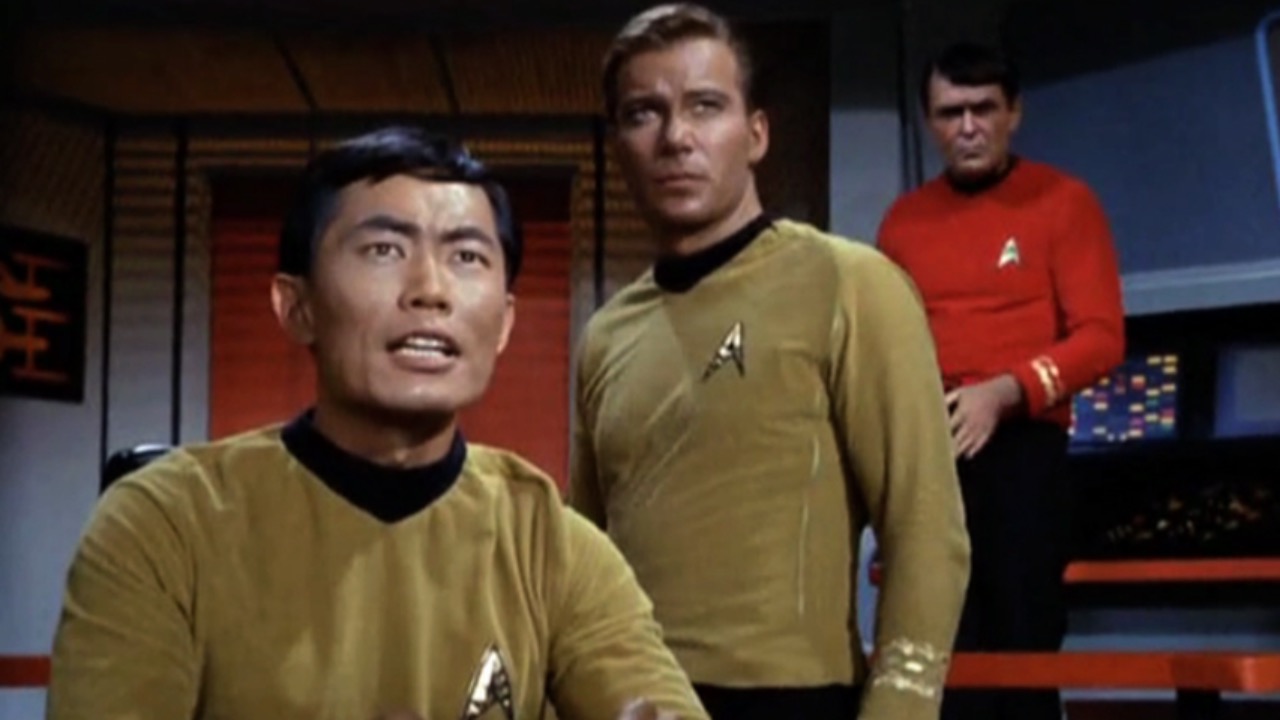
On this day, June 29, 1964, NBC made a historic decision that would forever change the landscape of television and science fiction: the network greenlit Gene Roddenberry’s script for the pilot episode of Star Trek, titled The Cage. This approval marked the beginning of a cultural phenomenon that would inspire generations, spark a global fandom, and redefine storytelling in the science fiction genre.
You can find Star Trek on Amazon HERE or on Paramount+.
Gene Roddenberry, a former pilot and police officer turned television writer, envisioned Star Trek as a “Wagon Train to the stars,” blending the adventurous spirit of Westerns with the boundless possibilities of space exploration. His script for The Cage introduced the starship Enterprise, commanded by Captain Christopher Pike, and a diverse crew navigating the uncharted reaches of the galaxy. The story followed Pike’s encounter with a telepathic alien species on the planet Talos IV, exploring themes of human nature, morality, and the quest for knowledge. Roddenberry’s vision was ambitious, presenting a future where humanity had overcome its divisions to explore the cosmos in peace, a stark contrast to the Cold War tensions of the 1960s.
NBC’s approval was not without hesitation. The script’s cerebral tone and philosophical undertones were unconventional for network television, which leaned heavily on formulaic dramas and sitcoms. However, Roddenberry’s persistence and the backing of Desilu Productions, led by Lucille Ball, secured the pilot’s production. Filmed in late 1964, The Cage starred Jeffrey Hunter as Pike, Majel Barrett as Number One, and Leonard Nimoy as the enigmatic Vulcan, Mr. Spock. Though NBC deemed the pilot “too cerebral” for mainstream audiences, they saw enough potential to order a second pilot, a rare move that led to Where No Man Has Gone Before and the eventual series launch in 1966.
Star Trek’s history is one of resilience and innovation. The original series ran for three seasons (1966–1969), struggling with low ratings but gaining a devoted following. Its cancellation sparked fan campaigns that kept the franchise alive, leading to an animated series (1973–1974), feature films starting with Star Trek: The Motion Picture (1979), and multiple spin-offs, including The Next Generation (1987–1994), Deep Space Nine, Voyager, and Enterprise. The franchise expanded into novels, comics, and video games, cementing its place in popular culture.
The Cage itself was not aired in its entirety until 1988, but its legacy endures. Roddenberry’s vision of a hopeful, inclusive future, coupled with stories tackling social issues through allegory, resonated deeply. Today, Star Trek boasts over a dozen series, 13 films, and a fanbase spanning generations. On this 61st anniversary of NBC’s approval, we celebrate the spark that ignited a franchise boldly going where no show had gone before.
You can find Star Trek on Amazon HERE or on Paramount+.
Please follow us on Facebook and X for more news, tips, and reviews. Need cord cutting tech support? Join our Cord Cutting Tech Support Facebook Group for help. You can find Luke on X HERE.