
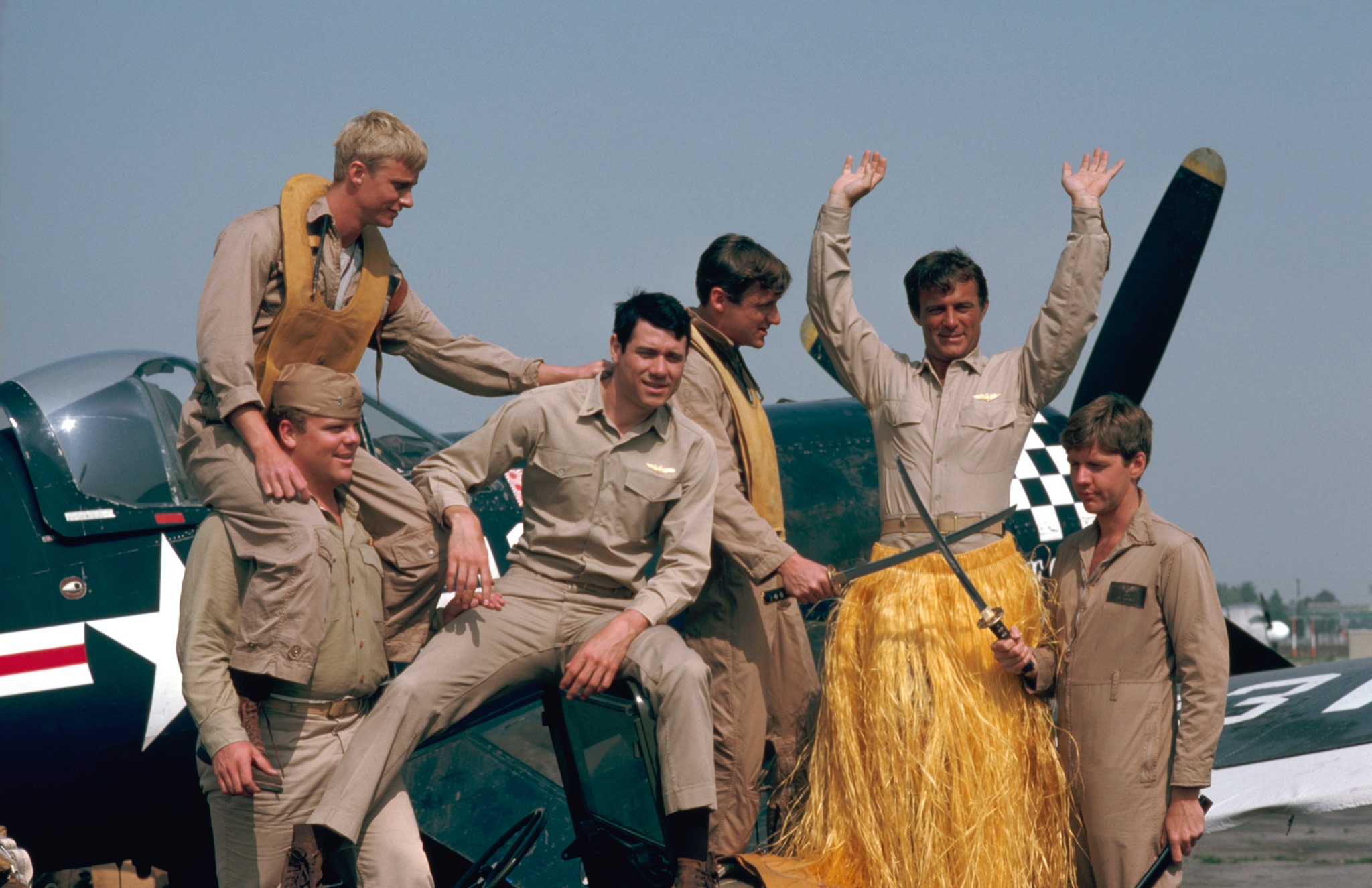
Forty-eight years ago today, on April 6, 1978, NBC aired the final episode of the World War II adventure series Black Sheep Squadron, concluding a two-season run that had blended high-stakes aerial combat with the camaraderie and antics of a group of unconventional Marine pilots. The 37th installment brought an end to the program that had entertained audiences with its depictions of wartime heroism and personal rivalries set against the backdrop of the Pacific theater. As viewers watched the squadron face its latest challenges, the network quietly closed the chapter on a show that had carved a distinctive niche in 1970s television programming.
Today, the show is hard to find on streaming, but it does air on free OTA TV on H&I TV HERE.
The series originally launched under the title Baa Baa Black Sheep in September 1976, with a two-hour pilot movie that introduced the core concept before transitioning into weekly episodes. Created and produced by Stephen J. Cannell through his production company in partnership with Universal Television, the program drew loose inspiration from the real-life exploits of United States Marine Corps Major Gregory Boyington and his VMF-214 fighter squadron, famously nicknamed the Black Sheep. During the Solomon Islands campaign in the early 1940s, Boyington had assembled a unit of misfit pilots, many of whom had been reassigned from other outfits due to disciplinary issues or unconventional flying styles. The historical squadron achieved notable success in downing Japanese aircraft while operating from remote island bases under harsh conditions, all while building a reputation for bold tactics and irreverent behavior.
In the television version, the narrative centered on the daily operations of this ragtag group as it engaged in dogfights, navigated supply shortages, and dealt with internal conflicts and brass from higher command. The stories combined intense action sequences featuring vintage fighter planes with lighter moments of squadron life, including pranks, rivalries, and off-duty escapades that highlighted the pilots’ personalities. Robert Conrad anchored the cast in the lead role as the gruff, hard-living squadron commander who balanced leadership demands with his own maverick tendencies. Supporting players included Simon Oakland as a no-nonsense general overseeing operations, Dana Elcar as a by-the-book colonel often at odds with the unit, and an ensemble of actors portraying the diverse pilots, such as Dirk Blocker, W. K. Stratton, John Larroquette, and Larry Manetti. The production emphasized authenticity by incorporating actual World War II-era Corsair aircraft for flight footage, lending a realistic edge to the combat scenes filmed at locations that doubled for Pacific islands.
Season one delivered 24 episodes and quickly built a following among viewers drawn to its mix of drama and humor, though it also faced criticism for its portrayal of violence and drinking. Network executives initially canceled the show at the end of that first run amid concerns over ratings performance and content standards common to the era. Audience demand and adjustments to the format led to a revival for a shortened second season of 13 episodes, during which the title shifted to Black Sheep Squadron for broader syndication appeal. The revamped season introduced additional characters, including nurses stationed nearby, to expand storylines beyond pure combat and add interpersonal dynamics. Despite these changes, the core focus remained on the pilots’ missions and their unbreakable bond forged in battle.
Throughout its broadcast, the series stood out from other wartime dramas of the period by emphasizing character-driven storytelling over strict historical accuracy. Producers took creative liberties with timelines and events to heighten entertainment value, yet the program captured the spirit of resilience and defiance that defined the original Black Sheep unit. Boyington himself served as a technical advisor early on, offering insights that informed the aerial maneuvers and squadron culture depicted on screen. The show’s appeal lay in its portrayal of ordinary men rising to extraordinary circumstances, complete with the flaws and humor that made them relatable.
After the final episode aired, Black Sheep Squadron transitioned into syndication, where it found renewed popularity on cable channels and local stations throughout the 1980s and beyond. Reruns allowed new generations to discover the adventures of the Pacific pilots, cementing its status as a cult classic among fans of military-themed programming. The series influenced later action dramas by demonstrating how ensemble casts and period settings could sustain viewer interest through a balance of spectacle and personality. While it never achieved blockbuster ratings during its original run, its legacy endures as a vivid snapshot of 1970s network television’s approach to historical storytelling, one that celebrated the underdogs who helped secure victory in the skies over the Pacific.
Today, the anniversary serves as a reminder of how television once brought wartime history into living rooms with a blend of grit and levity. The final flight of Black Sheep Squadron on that April evening in 1978 wrapped up 37 episodes of high-flying entertainment that continue to resonate with audiences interested in the human side of military service.
Today, the show is hard to find on streaming, but it does air on free OTA TV on H&I TV HERE.
Please add Cord Cutters News as a source for your Google News feed HERE. Please follow us on Facebook and X for more news, tips, and reviews. Need cord cutting tech support? Join our Cord Cutting Tech Support Facebook Group for help.