
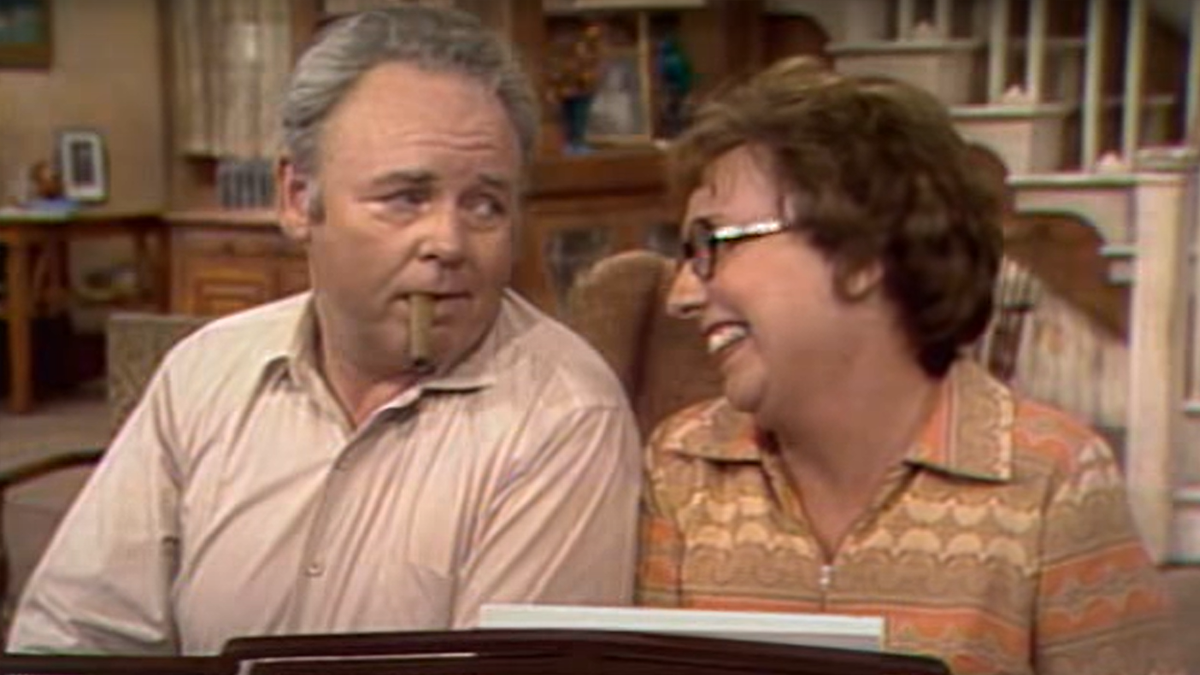
Today marks the 47th anniversary of a landmark moment in television history: the airing of the 200th episode of the groundbreaking sitcom All in the Family on January 28, 1979. As we look back on this iconic series that revolutionized American comedy and social commentary, it’s a perfect opportunity to reflect on the episode that symbolized the show’s enduring success and cultural impact. The episode, titled “Stephanie and the Crime Wave,” captured the essence of what made All in the Family a household name—blending humor, family dynamics, and real-world issues in a way that resonated with millions.
You can watch All in the Family on Pluto TV HERE.
In “Stephanie and the Crime Wave,” the Bunker family faces a domestic crisis when young Stephanie Mills (played by Danielle Brisebois), the niece who had recently joined the household, is accused of stealing items at school and even from home. Archie Bunker, the gruff and opinionated patriarch portrayed by Carroll O’Connor, suspects foul play and launches into one of his classic tirades, blaming everything from “juvenile delinquents” to the changing times. Edith Bunker (Jean Stapleton), the ever-patient and loving matriarch, tries to approach the situation with empathy, while the family navigates the emotional turmoil. The episode delves into themes of trust, adolescence, and forgiveness, all wrapped in the show’s signature mix of laughter and poignancy. Directed by Paul Bogart and written by Mel Tolkin and Larry Rhine, it exemplified how All in the Family could turn everyday family conflicts into profound statements on society.
Reaching 200 episodes was no small feat in an era when many shows struggled to last beyond a few seasons. All in the Family not only survived but thrived, becoming one of the most watched programs of the 1970s. The series wrapped up its run just a few months later in April 1979, concluding with a total of over 200 episodes (depending on counting methods, including specials), but the 200th aired at a time when the show was still at the peak of its popularity, regularly topping Nielsen ratings.
To understand the significance of this milestone, it’s essential to revisit the short history of the show. All in the Family premiered on CBS on January 12, 1971, created by legendary producer Norman Lear. Inspired by the British sitcom Till Death Us Do Part, Lear adapted the concept to an American context, centering on the working-class Bunker family living in Queens, New York. Archie Bunker was a World War II veteran and dock foreman, known for his conservative views, ethnic slurs, and clashes with his liberal son-in-law, Michael “Meathead” Stivic (Rob Reiner). Gloria Stivic (Sally Struthers), Archie’s daughter, often mediated between the two, while Edith provided the moral compass with her naive yet wise insights.
What set All in the Family apart was its fearless approach to controversial topics. In an age when TV was largely escapist, the show tackled racism, sexism, abortion, homosexuality, the Vietnam War, and women’s rights head-on. Episodes like “Sammy’s Visit” (featuring Sammy Davis Jr.) and “Edith’s 50th Birthday” (addressing sexual assault) pushed boundaries and sparked national conversations. The series won four consecutive Primetime Emmy Awards for Outstanding Comedy Series from 1971 to 1973 and again in 1978, with O’Connor and Stapleton earning multiple Emmys for their roles. It spawned several successful spin-offs, including Maude (1972-1978), The Jeffersons (1975-1985), and Archie Bunker’s Place (1979-1983), creating a shared universe that influenced modern TV franchises.
By 1979, All in the Family had cemented its place as a cultural touchstone. It averaged over 20 million viewers per episode at its height and was praised for humanizing complex issues through relatable characters. Critics noted how Archie’s bigotry was portrayed not as endorsement but as satire, encouraging audiences to question their own biases. The show’s legacy endures in contemporary series like The Simpsons and Family Guy, which owe a debt to its blend of humor and social critique.
The 200th episode’s focus on Stephanie highlighted the show’s evolution. Introduced in season 9, Stephanie brought a new generation into the fold, allowing the series to explore child welfare and family expansion. As Archie grapples with his role as a guardian, the episode underscores the theme of change—a constant in the Bunker household. Fans remember it for its heartfelt resolution, where the family unites, reinforcing the show’s message that love triumphs over flaws.
Forty-seven years later, All in the Family remains relevant in a divided world. Streaming on platforms like Pluto TV and Amazon Prime, it introduces new audiences to its timeless lessons. As Norman Lear, now 103, reflected in a recent interview, “The show was about listening to each other, even when we disagree.” On this anniversary, we celebrate not just an episode, but a series that changed TV forever.
You can watch All in the Family on Pluto TV HERE.
Please add Cord Cutters News as a source for your Google News feed HERE. Please follow us on Facebook and X for more news, tips, and reviews. Need cord cutting tech support? Join our Cord Cutting Tech Support Facebook Group for help.