
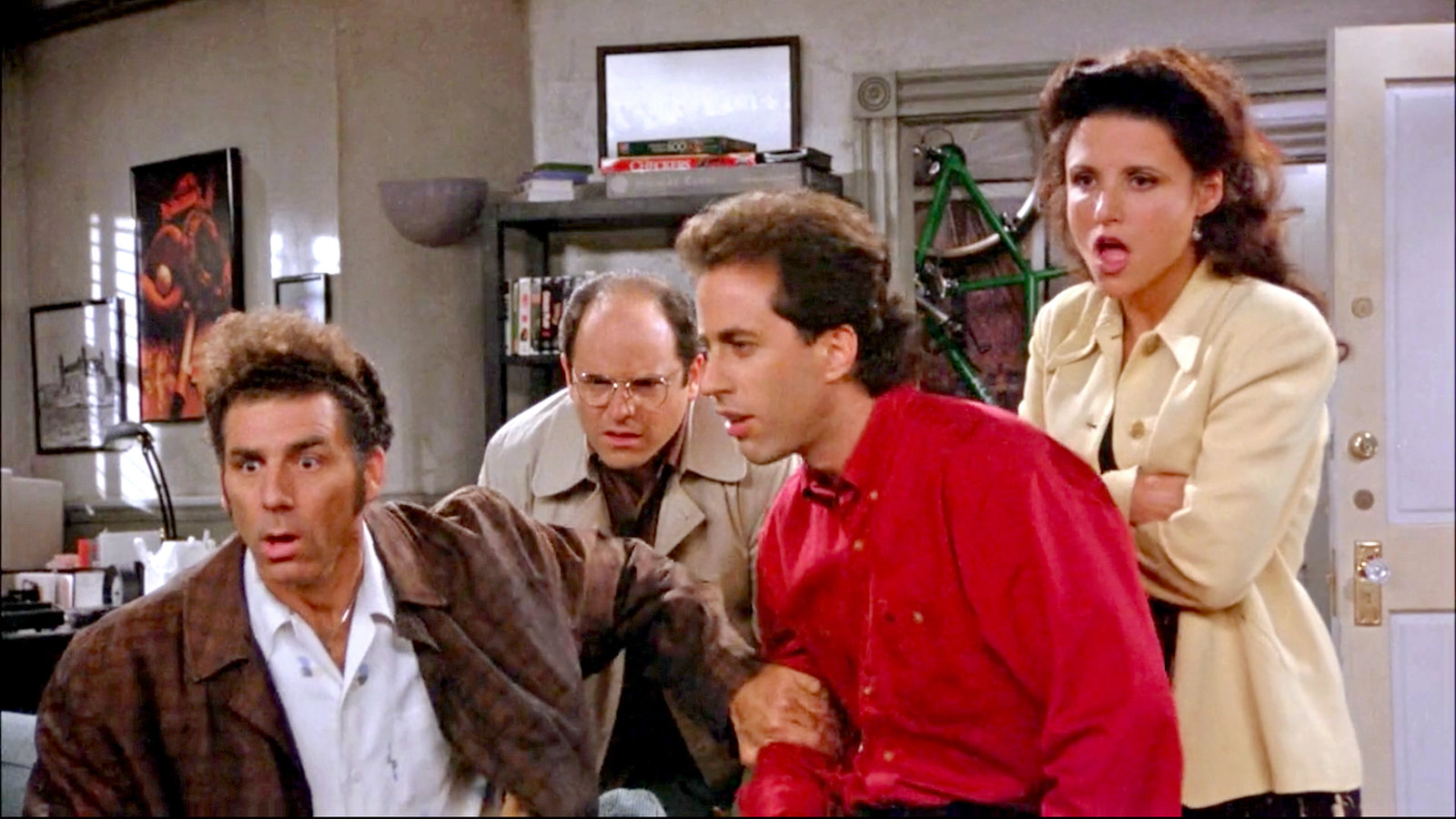
Thirty-five years ago today, on May 31, 1990, a quirky sitcom quietly debuted on NBC, introducing the world to Jerry Seinfeld, George Costanza, Elaine Benes, and Kramer. Titled Seinfeld, the show, famously dubbed “a show about nothing,” would go on to redefine television comedy, becoming one of the most influential and beloved sitcoms in history. As we celebrate this milestone, let’s take a trip down memory lane to explore the origins, impact, and enduring legacy of Seinfeld.
You can find Seinfeld on Netflix HERE. Or on Amazon HERE.
The brainchild of comedian Jerry Seinfeld and writer Larry David, Seinfeld began as a one-off special called The Seinfeld Chronicles, which aired on July 5, 1989. The pilot introduced Jerry, a stand-up comedian navigating the absurdities of everyday life in New York City, alongside his neurotic best friend George (Jason Alexander), his eccentric neighbor Kramer (Michael Richards), and, later, his ex-girlfriend-turned-friend Elaine (Julia Louis-Dreyfus). The show’s premise was simple yet revolutionary: it focused on the minutiae of daily life—waiting at a restaurant, losing a car in a parking garage, or debating the etiquette of “double-dipping.” This focus on mundane, relatable situations, paired with sharp, observational humor, set Seinfeld apart from the family-centric or workplace sitcoms of the era.
Initially, Seinfeld struggled to find its footing. The pilot received lukewarm reviews, and NBC was hesitant to greenlight a full season. However, the network ordered four episodes, and the show officially premiered as Seinfeld on May 31, 1990. Early episodes were slow to gain traction, but by its third season, the show found its rhythm, blending self-referential humor, intricate storylines, and unforgettable catchphrases like “Yada, yada, yada” and “No soup for you!” By 1993, Seinfeld was a cultural juggernaut, consistently ranking among the top-rated shows on television.
Running for nine seasons and 180 episodes until its finale on May 14, 1998, Seinfeld earned 68 Emmy nominations and 10 wins, including Outstanding Comedy Series in 1993. Its ensemble cast became household names, and its writing—often weaving multiple storylines into a single, satisfying conclusion—set a new standard for sitcoms. Episodes like “The Contest,” “The Soup Nazi,” and “The Parking Garage” remain iconic for their bold humor and timeless relatability.
The show’s influence is undeniable. It paved the way for character-driven comedies like Friends and Curb Your Enthusiasm, and its focus on triviality resonated with audiences who saw their own lives reflected in the gang’s misadventures. Seinfeld also popularized a new comedic sensibility, one that embraced flawed, self-absorbed characters who rarely learned from their mistakes—a stark contrast to the moral-driven sitcoms of the past.
As we mark 35 years since Seinfeld first aired, its legacy endures as a masterclass in comedy. What began as a risky experiment about nothing became everything—a timeless reflection of human quirks and the humor in the everyday. So, grab a bowl of cereal, avoid the close-talkers, and celebrate the show that taught us all to laugh at life’s absurdities.
You can find Seinfeld on Netflix HERE. Or on Amazon HERE.
Please follow us on Facebook and X for more news, tips, and reviews. Need cord cutting tech support? Join our Cord Cutting Tech Support Facebook Group for help. You can find Luke on X HERE.