
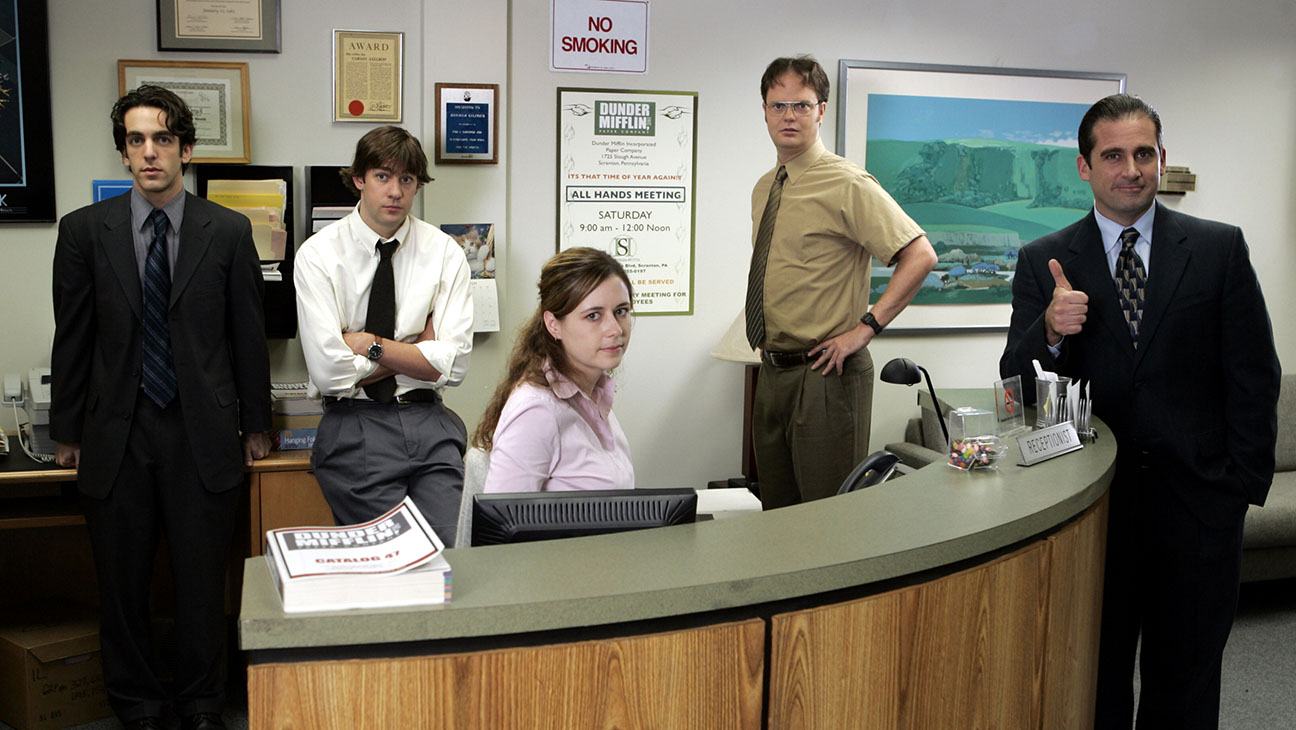
Twenty-one years ago today, on the evening of March 24, 2005, a little-known mockumentary about paper salespeople shuffled onto American television screens with modest expectations and an uncertain future. Few viewers tuning in to NBC that Tuesday night could have predicted that what they were watching would go on to become one of the most beloved and influential comedy series in the history of American television. The Office had arrived, and it would change the landscape of the sitcom format forever.
You can find The Office on Amazon and Peacock HERE.
The pilot episode introduced audiences to the Dunder Mifflin Paper Company’s Scranton, Pennsylvania branch and the colorful cast of workers who populated it. At the center of it all was Michael Scott, a bumbling, well-meaning, and deeply insecure regional manager portrayed by Steve Carell. Surrounding him was an ensemble that included the straight-laced Jim Halpert played by John Krasinski, the loyal and peculiar Dwight Schrute brought to life by Rainn Wilson, and the quietly captivating receptionist Pam Beesly portrayed by Jenna Fischer. Together, they formed a workplace family that millions of viewers would come to regard as their own.
The show was developed by Greg Daniels, an experienced television writer whose credits included work on Saturday Night Live and The Simpsons. Daniels was tasked with adapting the British original created by Ricky Gervais and Stephen Merchant, a show that had earned widespread critical acclaim across the Atlantic but had also run for only two short series and a pair of specials. Transplanting its sensibility to an American context was considered a risky proposition, particularly given the passionate fanbase the British version had cultivated. Early reviews of the American pilot were indeed mixed, with some critics dismissing it as a pale imitation. The ratings for that first episode were underwhelming by network standards.
Yet NBC held on, and the decision proved to be a transformative one for both the network and the medium. Over the following seasons, the series found its footing and developed a distinctive voice that distinguished it clearly from its British predecessor. The romantic tension between Jim and Pam became must-see television. Michael Scott evolved from a cringe-inducing caricature into a genuinely complex and sympathetic character. The supporting cast, which would eventually grow to include Ed Helms, Mindy Kaling, B.J. Novak, Craig Robinson, Ellie Kemper, and James Spader among many others, became one of the deepest and most consistently funny ensembles on American network television.
The show ran for nine seasons, concluding in May 2013 with a finale that drew over fifteen million viewers, the largest audience the series had attracted in years. By that point, it had won multiple Emmy Awards, earned critical re-evaluation that placed it firmly among the elite comedies of its era, and cultivated a fanbase of remarkable devotion and enthusiasm. Its departure from the airwaves felt, to many of its viewers, like losing a group of close friends.
But in some ways, the story of The Office was only beginning when it left network television. The rise of streaming platforms transformed the show from a beloved series into a full-blown cultural phenomenon. When Netflix acquired the streaming rights, the series found entirely new generations of viewers who binged through its nine seasons in a way that the original broadcast model had never permitted. Characters, catchphrases, and scenes from the show became the raw material for countless internet memes, fan communities, and pop culture references. Merchandise flew off shelves. The show became, improbably, even more popular in reruns and streaming than it had been during its original run.
The cultural legacy of The Office extends well beyond its own success. The mockumentary format it helped popularize in the American market influenced a wave of subsequent television comedies that adopted the documentary aesthetic, the confessional talking-head interview, and the hand-held camera work that the show had made familiar to mainstream audiences. Its influence can be felt across decades of television that followed, from network sitcoms to prestige streaming comedies.
The careers it launched have also proven extraordinarily durable. Steve Carell became one of Hollywood’s most bankable dramatic and comedic stars. John Krasinski transitioned into film directing and action filmmaking. Mindy Kaling became a prolific writer, producer, and actress with her own successful television projects. Rainn Wilson, Ed Helms, Ellie Kemper, Craig Robinson, and B.J. Novak all maintained active and successful careers in the entertainment industry long after the final episode aired.
As the show marks its twenty-first anniversary today, discussions about its potential return continue to circulate in entertainment circles. Various cast members have commented over the years about the possibility of a revival or continuation in some form, though no definitive plans have been publicly confirmed. The appetite among fans remains evident and substantial.
Whether or not Dunder Mifflin ever opens its doors again in some new form, the legacy of what premiered on this date in 2005 is beyond dispute. A show that began with modest ratings and skeptical reviews went on to define a generation of comedy, reshape how Americans consumed television, and create characters and moments that have endured in the cultural memory with remarkable staying power. Twenty-one years on, it remains as warm, funny, and human as ever — a testament to the vision of everyone who helped bring that fictional Scranton paper company to life on a Tuesday night in the spring of 2005.
You can find The Office on Amazon and Peacock HERE.
Please add Cord Cutters News as a source for your Google News feed HERE. Please follow us on Facebook and X for more news, tips, and reviews. Need cord cutting tech support? Join our Cord Cutting Tech Support Facebook Group for help.